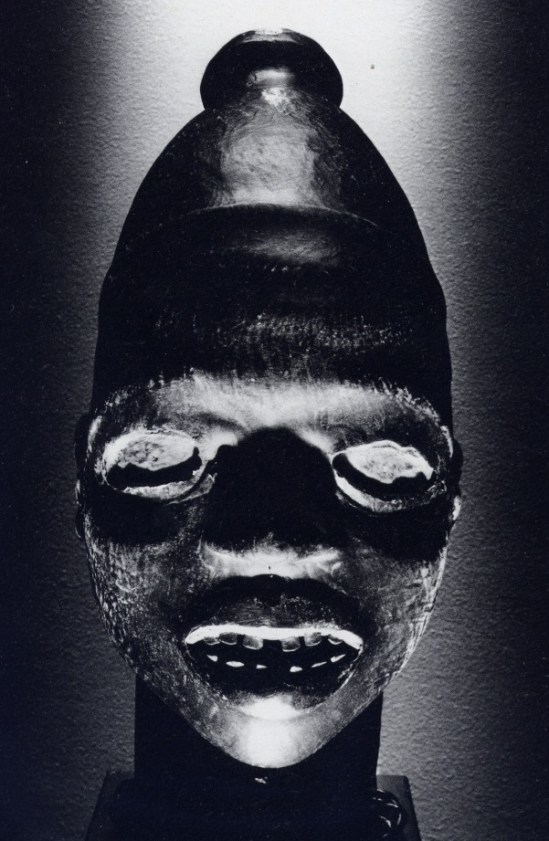
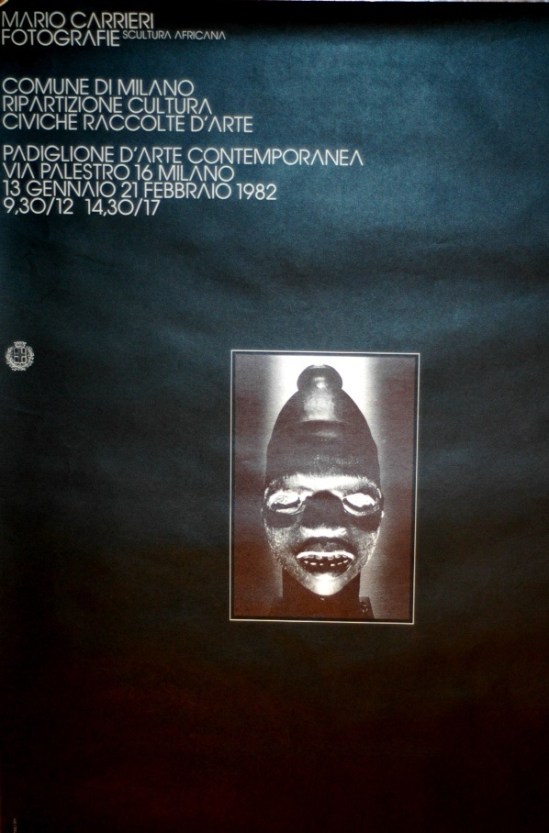
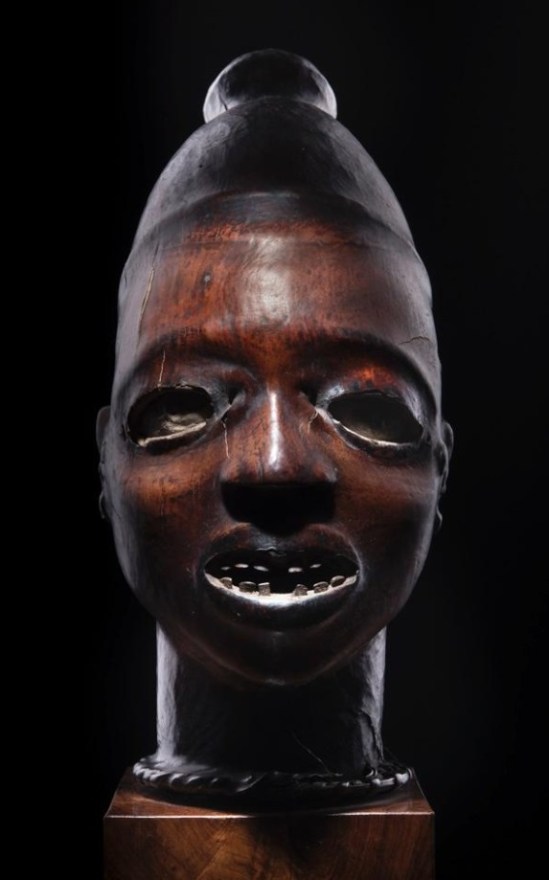
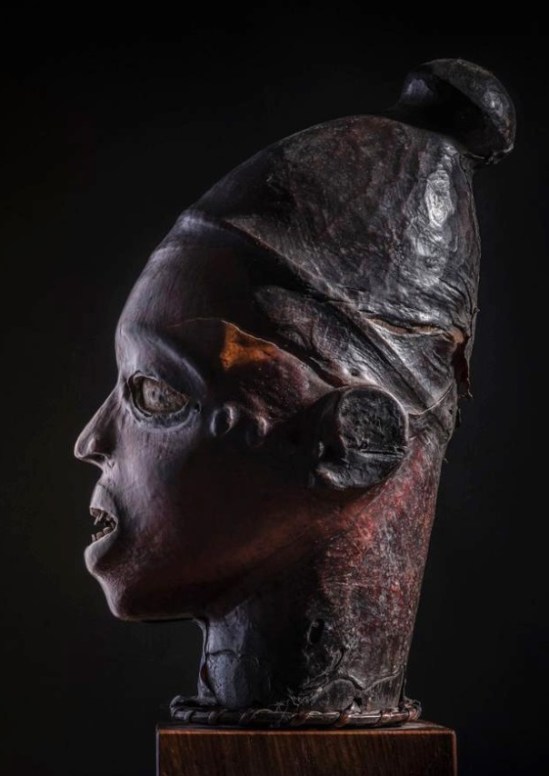
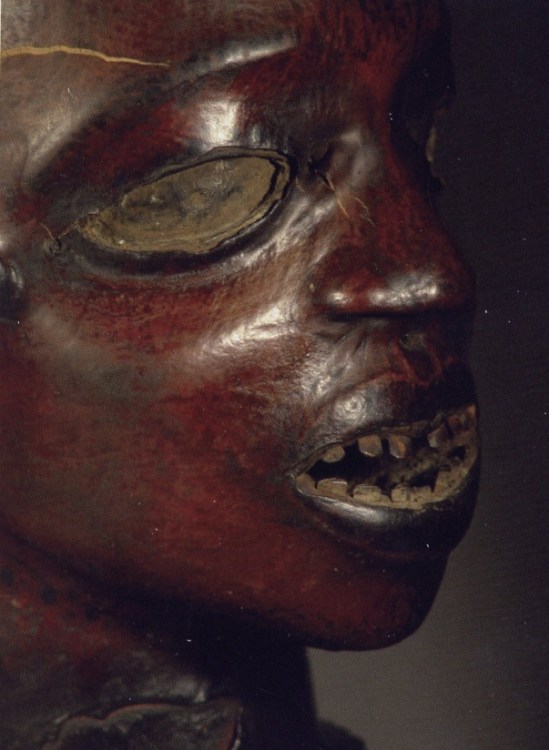
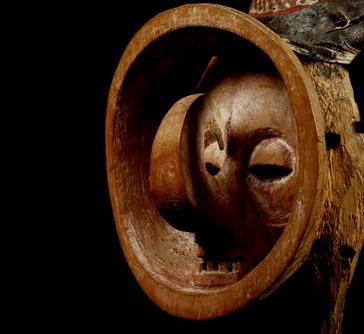
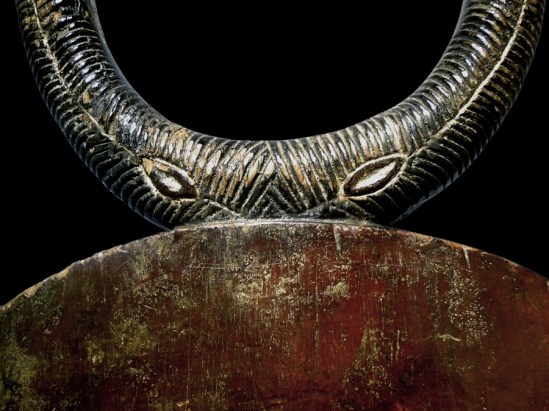
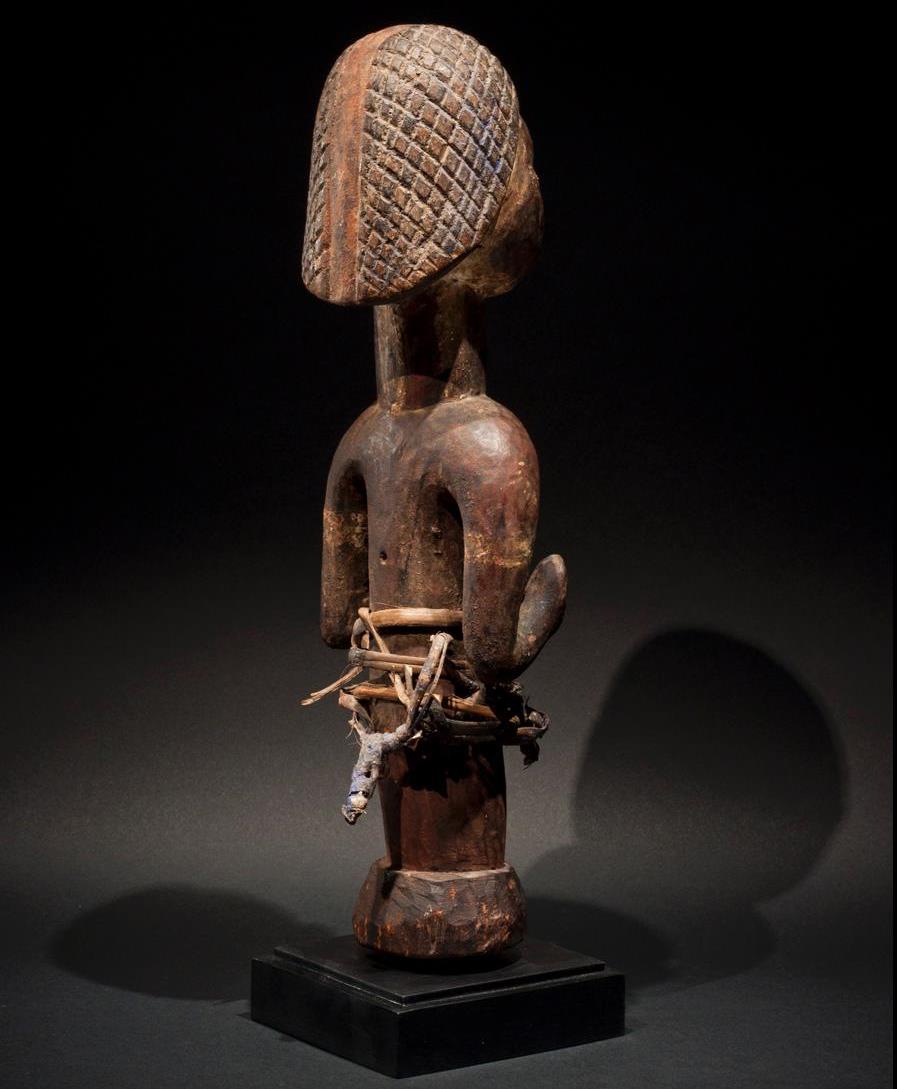
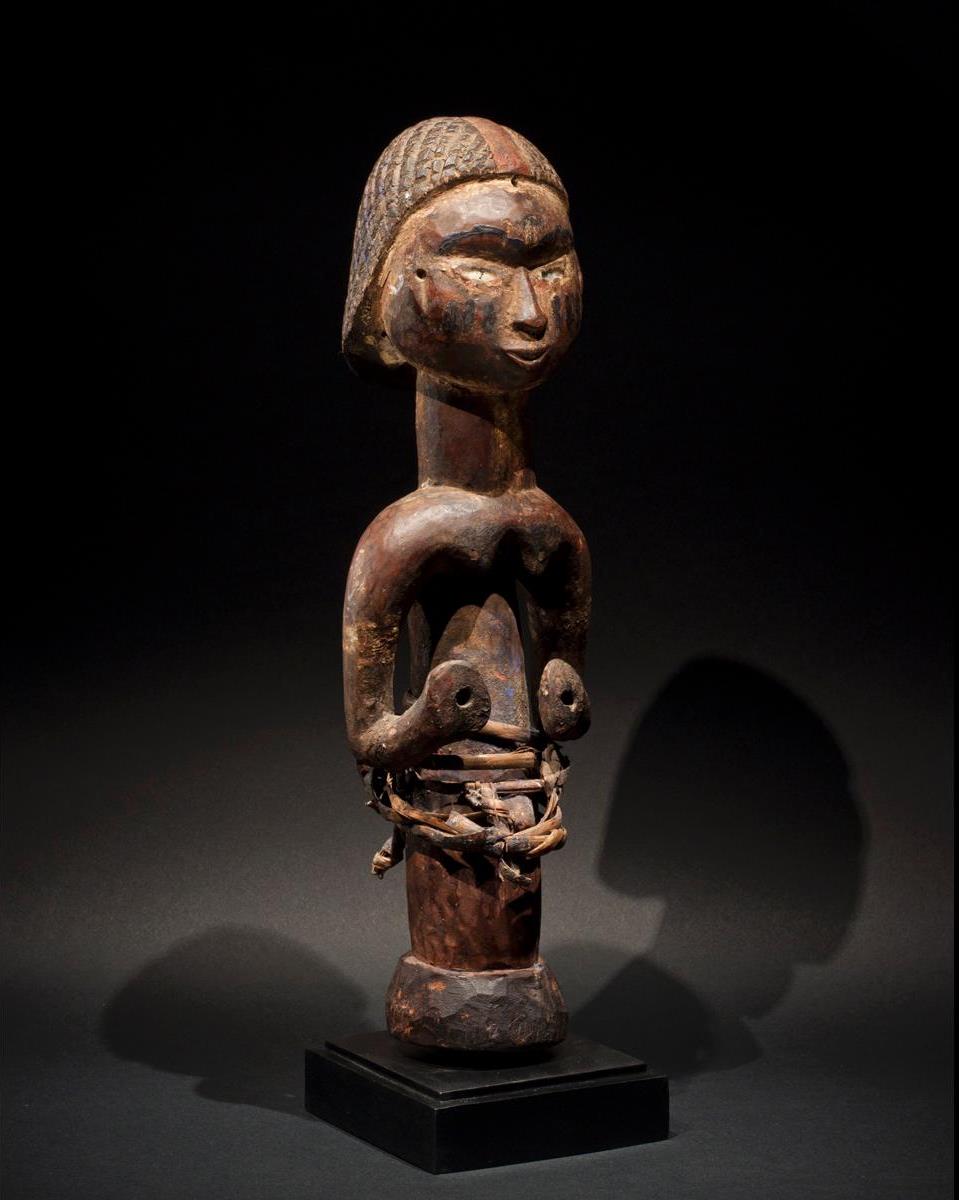
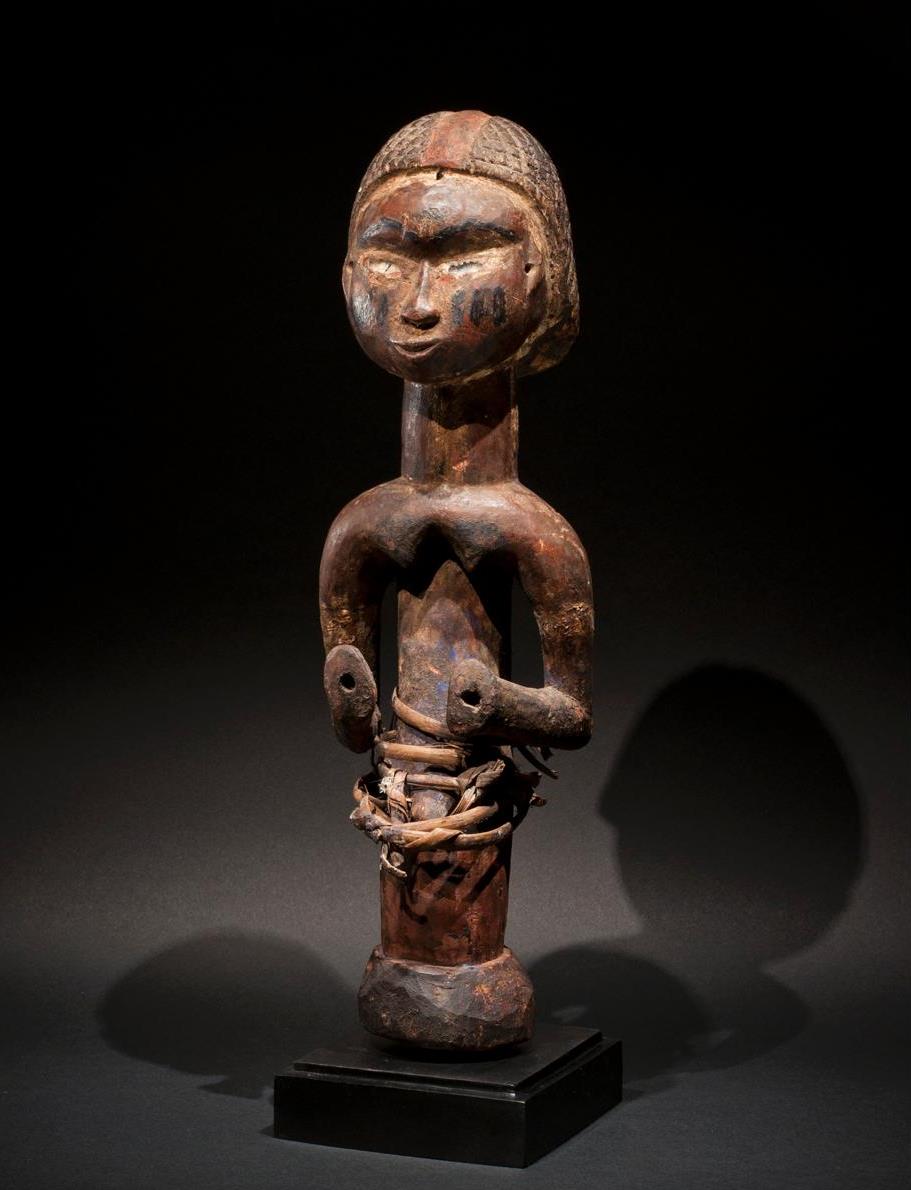
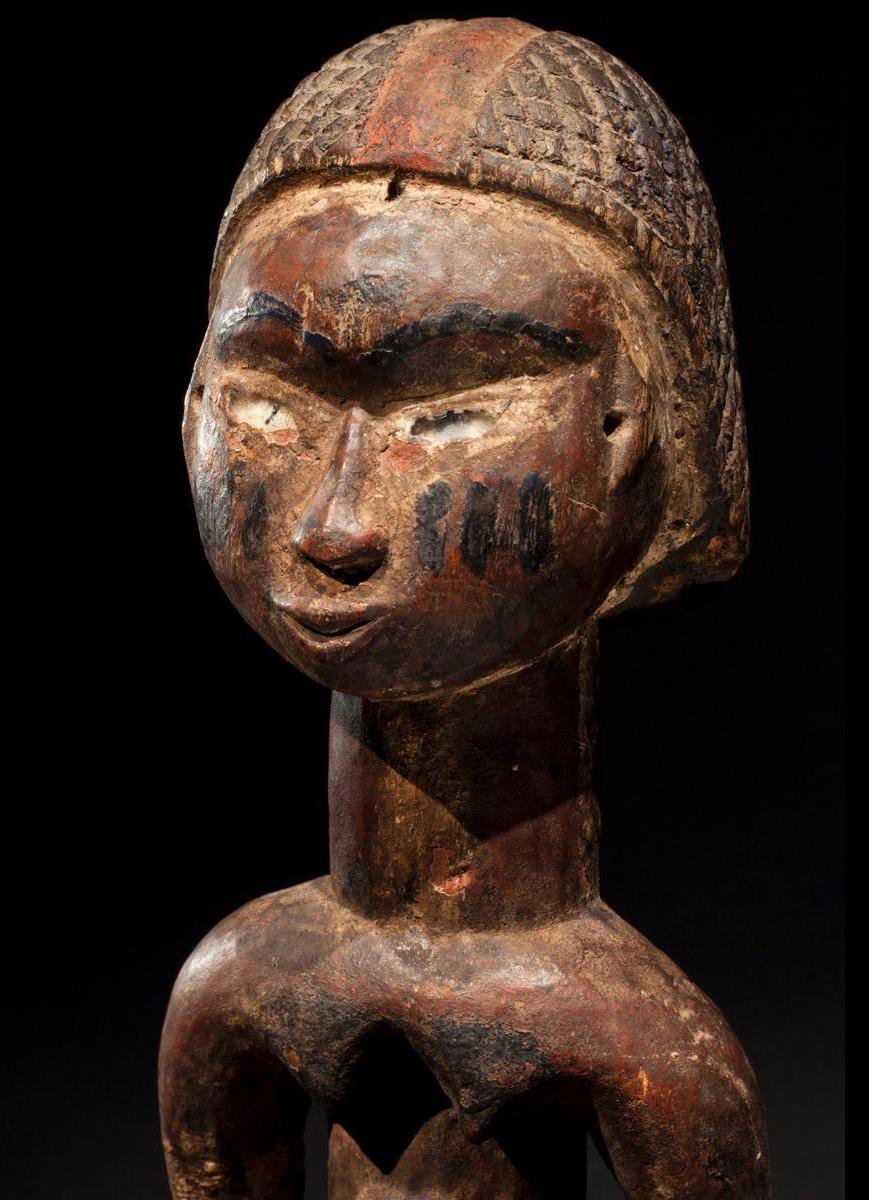
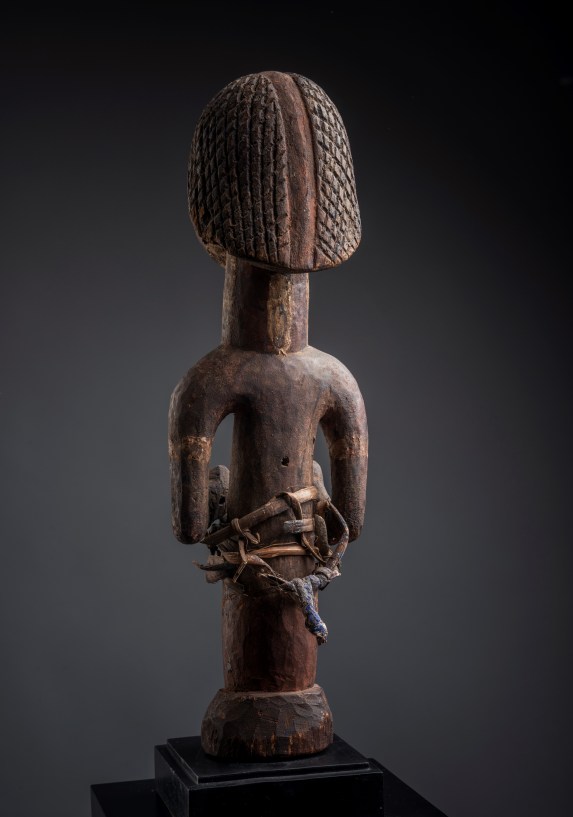
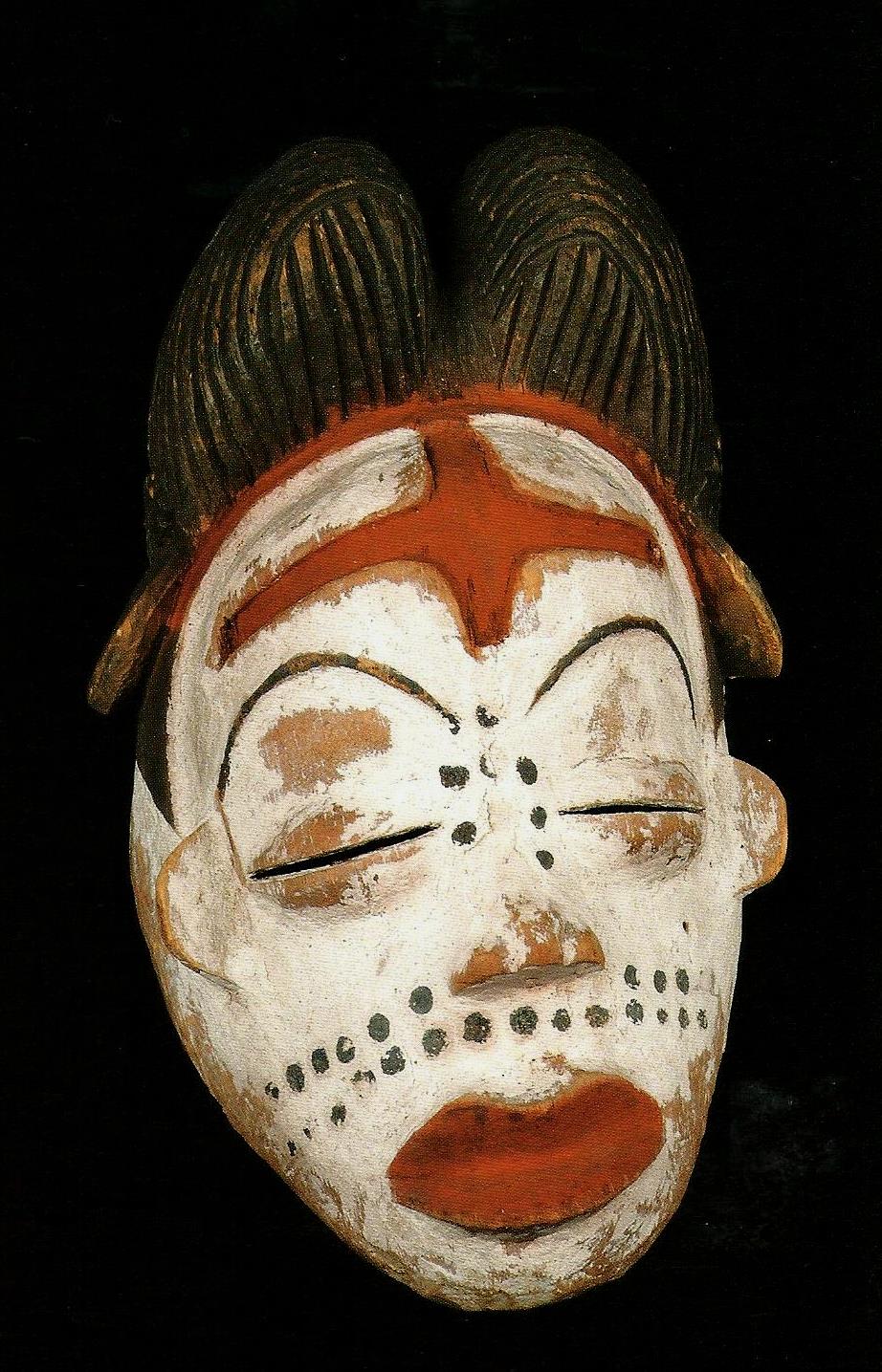
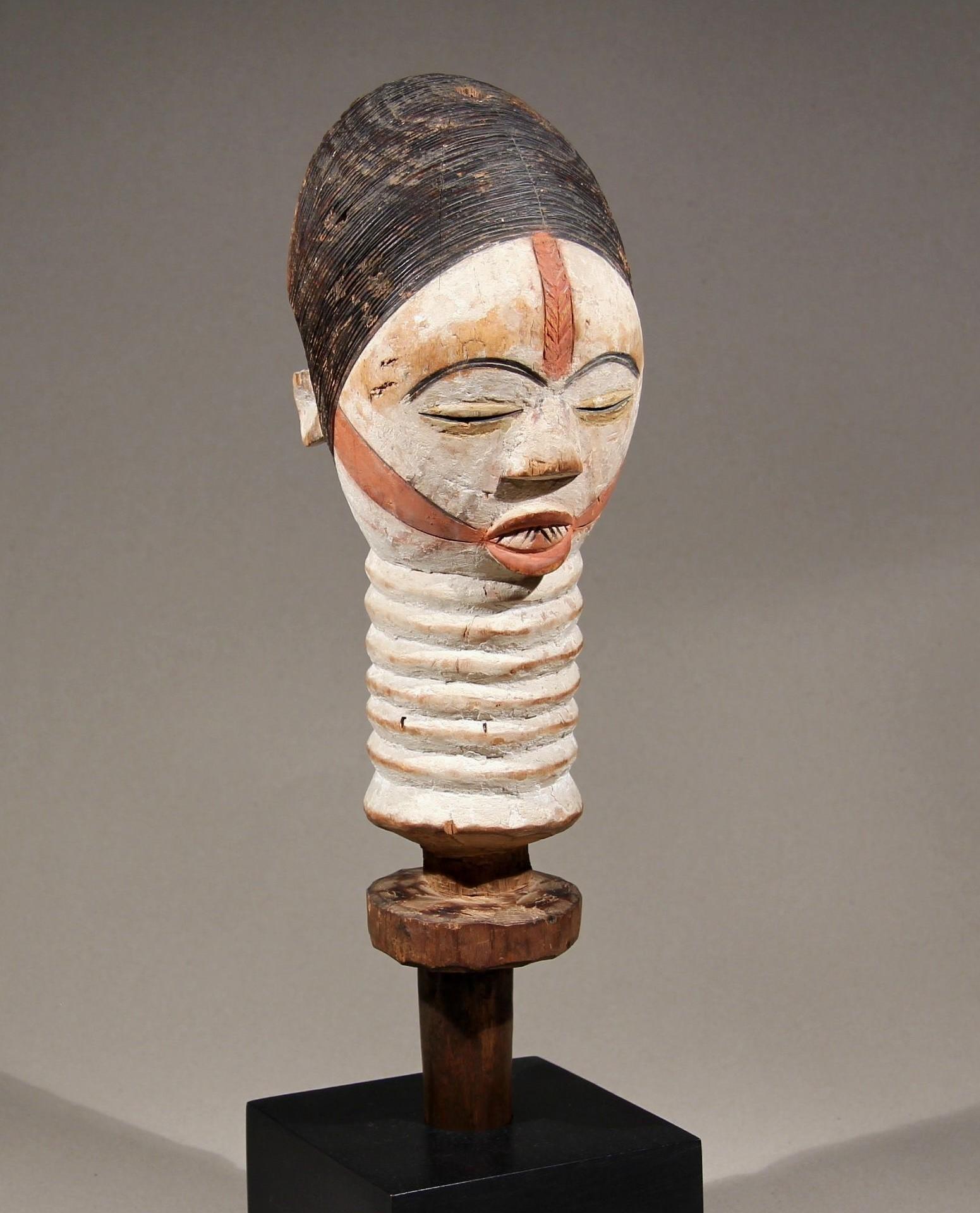
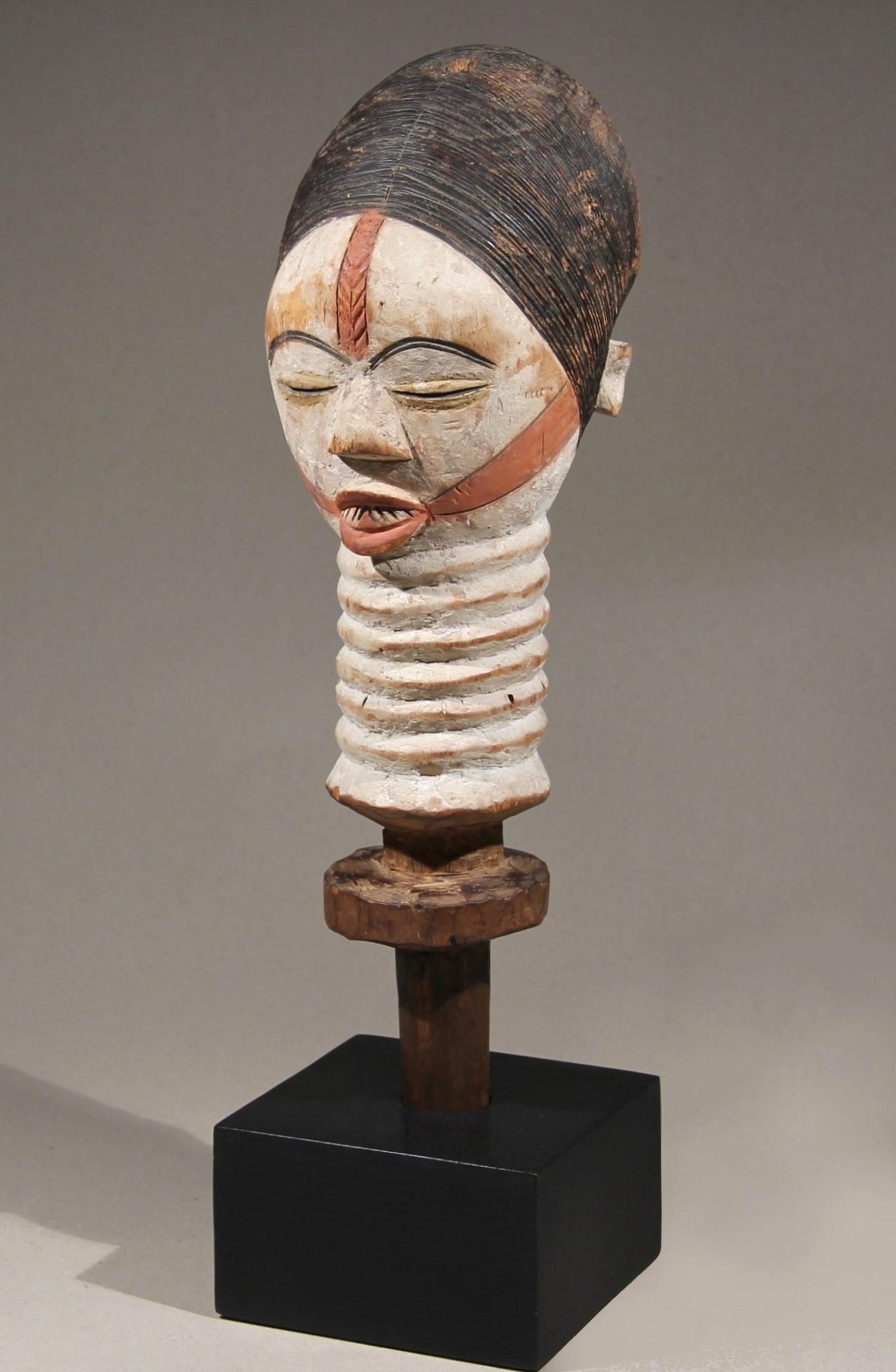
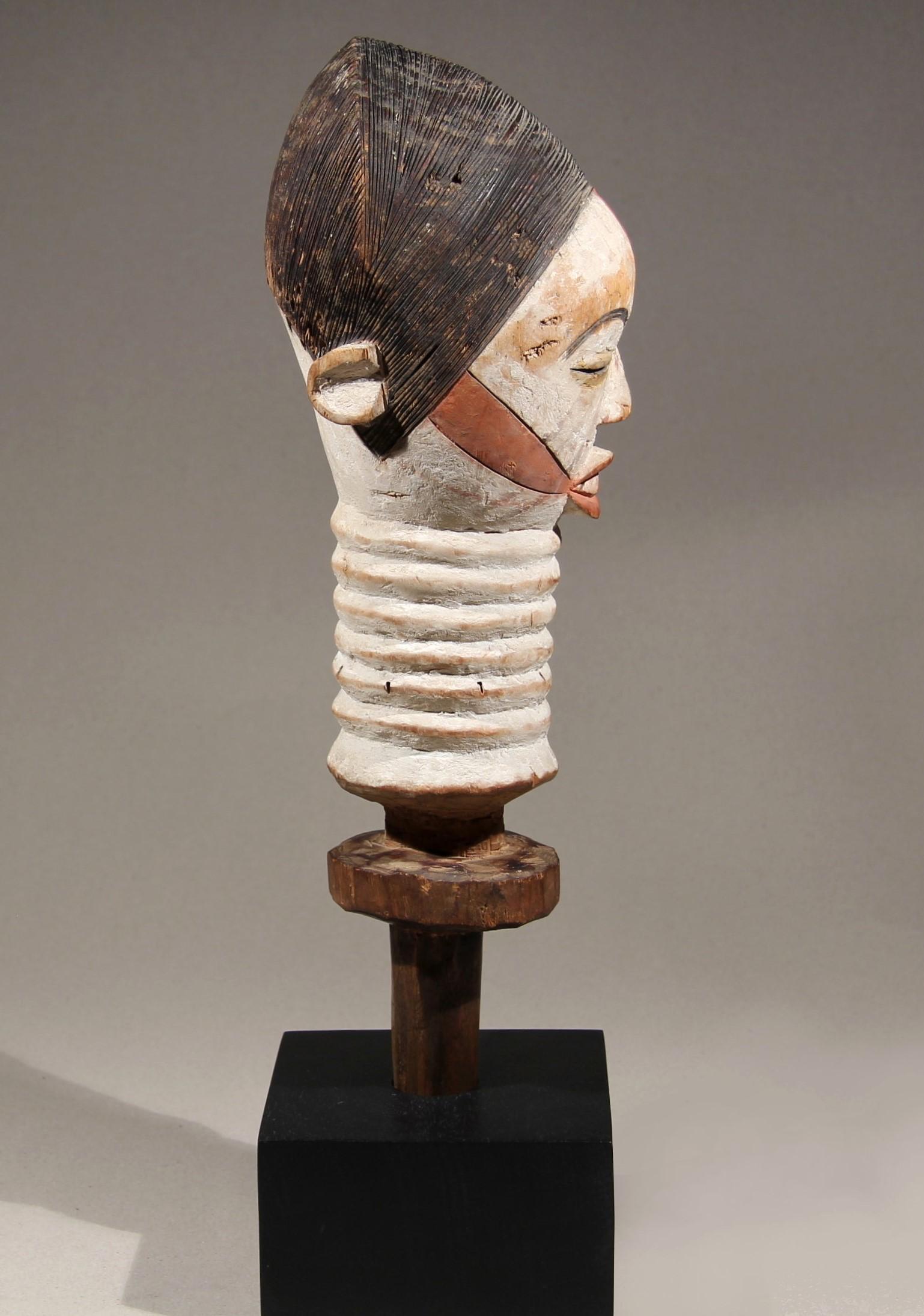
Ekoi/ Ejagham people, Ekpe society, Skin-covered wood mask headdress, Nigeria, Cross River Region

carrer10

H. 13,4 in / 34 cm
Wood, skin, vegetable fibers
Reddish /brown patina, details painted in black
Early 20th century

Private collection, Italy
Photo by Mario Carrieri and Fabio Cattabiani
Arti delle Mani Nere All Rights Reserved

Provenance
– Raffaele Carrieri, Coll. Milano
– Mario Carrieri, Coll. Milano
– Dalton-Somaré Gallery Milano

Exhibitions
-“Mario Carrieri”  Padiglione d’Arte Contemporanea di Milano Milano,14th January /21th February 1982
-“Mario Carrieri Amata luce” Fondazione Stelline, Milano, 21th October/18th December 2004
“Maschere Africane di vecchia generazione”, Dalton-Somaré Gallery, Milano, 4th / 24th December 2008
“L’Africa delle meraviglie – Arti africane nelle collezioni italiane”, Palazzo Ducale e Castello d’Albertis, 31th December 2010 – 5th June 2011.
“Africa. La terra degli spiriti”. Museo delle Culture (Mudec), Milano, 27 marzo/ 30 agosto 2015

ekoi10

Published
-Mario Carrieri, “ Fotografie Scultura Africana”, Milano, Gabriele Mazzotta ed. 1981, cover and fig. # 13 b/n
-Giovanni Chiaromonte ”Mario Carrieri Amata Luce“, Milano, Edizioni della Meridiana, 2004, pag.60, fig.#61 b/n
-Leonardo Vigorelli  “Maschere africane di vecchia generazione “, Milano, 2008, pag.#40,#41,#42 color
-Chantal Dandrieu e Fabrizio Giovagnoni, “Passione d’Africa. L’arte africana nelle collezioni italiane.” Milano, Officina Libraria ed., 2009, pag.137, fig. # 88, color.
-Ivan Bargna, Giovanna Parodi da Passano, “L’Africa delle meraviglie – Arti africane nelle collezioni italiane”, Genova, Silvana Editoriale, Cinisello Balsamo (MI), pag. 86, color
– Elio Revera “Africa. La terra degli spiriti”, Qui Brescia, n. 107, Marzo 2015, pag. 107, b/n
– Elio Revera “Africa. La terra degli spiriti” , Qui Bergamo, Marzo 2015, pag. 102, b/n
– AA.VV, Africa. Terra degli spiriti, a cura di Gigi Pezzoli e Claudia Zevi, 2015, Milano, 24 Ore Cultura ed. pag. 288, color

p

Ekoi people, also known as Ejagham, are an ethnic group in the extreme southeast of Nigeria and extending eastward into Northern Cameroon.

“It is throught  that Ejagham, the ‘true’ Ekoi, one of the East Nigerian ethnic groups, were the first to have made skin-covered masks and had danced in them. Ritual objects of this kind are not known anywhere else in Africa nor indeed in other parts of the world.

Starting with the Ekoi this custom spread over the whole of the Great-River area, this is to say –from a region stretching from the river of this name in the West to the so called Cameroons Grass Lands. Both cultured areas have influenced each other strongly over a long period of time. They share similar tribal organizations and hence also mutual traditions in masks. The Ekoi are not alone in using skin-covered head-gear and masks for dancing: other tribes on both sides of the border between Nigeria and the Cameroons observe this custom. They are the tribes to the West and North West of the Ekoi: The Bende/Ibo and Ibibio; in the North and East: The Keaka, Anyang, Banyang, Widekum, and finally in the North: The Boki and related groups (Nicklin, 1979).

What, in fact, gave rise to such masks and their use? Was it really the so-called ‘head hunting’ tradition according to which success in hunting had to be proved?

It is a fact that some of these mask-wearing societies like the nkwa-mbuk of the Etung/Ekoi and the nkang of the Boki practiced human sacrifice and hunted for heads ( Nicklin, 1977).
P.A.Talbot who had lived in the Cross River region at the beginning of this century reports as late as in 1912: “Thank God, now-a-days wooden masks covered by leather are worn instead of heads of newly slain enemies as was done in the past by the winning side” (Talbot, 1912).
“However cruel and brutal such custom may appear to us they were often not the cause but the result of difficult times and in the circumstances then prevailing possibly the only way of keeping society surviving”. (Shaedler, 1984)

This Anyang/Ekoi headdress on a basketry base, carved in wood and covered entirely in leather, in the form of a human head with naturalistic features with open lozenge mouth, with full lips and showing metal teeth, the eyes cut revealing the wooden core, with painted pupils; large ears, surmounted by a conical cap.

The pride and expressive composure of the headdress makes it an icon of Ekoi sculpture.
This head expresses at the highest level the aesthetic culture of this people without the use of excessive and grotesque elements that are often found in other headdress.

gg

Bibliography

-Talbot, P.A., “In Ju-Ju Land, Where Flowers Were Shot Down From Trees and Python-guarded Lake of the Dead is Sacred.” The Illustrated London News, 1912
-Talbot, P.A “In the Shadow of the Bush”, Heinemann ed., London, 1912
-Jeffeis, M.D.W. “ Some notes on the Ekoi” in Journal of the Royal Anthropological Institute, No. 69, 1939: 95-108
-Nicklin, K. “Skin-covered Mask of Cameroon” in African Arts, Vol. XII, No. 2, Feb. 1979: 54-59
-Schaedler, K.F. “Ekoi”, Panterra Verlag, Muenchen, 1984
-Neyt, F.- Désirant, A. “ Les Arts de la Benue aux racines des traditions” Editions Hawaiian Agronomics, Belgique, 1985
-AA.VV. “ Arts du Nigeria”, Réunion des Musées nationaux, Parigi, 1997
-Berns, M.C., Fardon, R., Kasfir, S.L and AA.VV “ Central Nigeria Unmasked: Arts of Benue River Valley”, Fowles Museum at Ucla, Los Angeles, 2011

Yale University Art Gallery n. 4274


Ekoi/ Ejagham people, Ekpe society, Skin-covered wood mask headdress, Nigeria, Cross River Region

H. 34 cm
Legno, pelle, fibra vegetale
Patina rosso/bruna con dettagli colorati di nero
Inizio XX sec.

Collezione Privata, Italia
Foto di Mario Carrieri e Fabio Cattabiani
Arti delle Mani Nere All Rights Reserved

Provenienza
-Ex coll. Raffaele Carrieri, Milano
-Ex coll. Mario Carrieri, Milano
-Gall. Dalton-Somaré, Milano

Esposizioni
-“Mario Carrieri”- Padiglione d’Arte Contemporanea di Milano Milano,14 gennaio/21 febbraio 1982
-“Mario Carrieri Amata luce” Fondazione Stelline, Milano, 21 ottobre/18 dicembre 2004
-“Maschere Africane di vecchia generazione”, Galleria Dalton-Somaré, Milano, 4 / 24 dicembre 2008
-“L’Africa delle meraviglie – Arti africane nelle collezioni italiane”, Palazzo Ducale e Castello d’Albertis, 31 Dicembre 2010/5 Giugno 2011.
-“Africa. La terra degli spiriti”. Museo delle Culture (Mudec), Milano, 27 marzo/30 agosto 2015

africa-la-terra-degli-spiriti

Pubblicazioni
-Mario Carrieri, “ Fotografie Scultura Africana”, Milano, Gabriele Mazzotta ed. 1981, copertina e fig. # 13 b/n
-Giovanni Chiaromonte ”Mario Carrieri Amata Luce“, Milano, Edizioni della Meridiana, 2004, pag.60, fig.#61 b/n
-Leonardo Vigorelli  “Maschere africane di vecchia generazione “, Milano, 2008, pag.#40,#41,#42 color
-Chantal Dandrieu e Fabrizio Giovagnoni, “Passione d’Africa.L’arte africana nelle collezioni italiane.” Milano, Officina Libraria ed., 2009, pag.137, fig. # 88, color.
-Ivan Bargna, Giovanna Parodi da Passano, “L’Africa delle meraviglie – Arti africane nelle collezioni italiane”, Genova, Silvana Editoriale, Cinisello Balsamo (MI), pag. 86, color

– Elio Revera “Africa. La terra degli spiriti”, Qui Brescia, n. 107, Marzo 2015, pag. 107, b/n
– Elio Revera “Africa. La terra degli spiriti” , Qui Bergamo, Marzo 2015, pag. 102, b/n
– AA.VV, Africa. Terra degli spiriti, a cura di Gigi Pezzoli e Claudia Zevi, 2015, Milano, 24 Ore Cultura ed. pag. 288, color

Gli  Ekoi, noti anche come Ejagham, sono un gruppo etnico dell’estremo sud-est della Nigeria che si espande anche verso est, nel nord del Camerun.

“Gli Ekoi/Ejagham (Nigeria sud/orientale), sono stati i primi ad aver realizzato maschere/copricapo rivestiti di pelle ed aver danzato con essi dopo averli indossati. Oggetti rituali di questa tipologia non sono noti in Africa, se non nelle realtà viciniori, e neppure in altre parti del mondo.

Gli Ekoi sono stanziati nella vasta regione del Cross River, lungo tutto il fiume fino ad occidente nelle terre  del Camerun denominate Grassland, con le cui popolazioni erano fiorenti gli scambi che hanno influenzato reciprocamente le due regioni, nigeriana e camerunense.

Gli Ekoi non sono i soli ad utilizzare copricapi e maschere ricoperti di pelle per la danza: altri gruppi etnici su entrambi i lati del confine tra la Nigeria e il Camerun, hanno questa usanza. A nord/est degli Ekoi, i Bende / Ibo-Ibibio; a nord /ovest, i Keaka, gli Anyang,i Banyang ed i Widekum, e infine a Nord, i Boki ed altri gruppi affini (Nicklin, 1979).

Cosa ha dato luogo a tali maschere ed al loro uso? E’ stata davvero la tradizione del cosiddetto ‘head hunting’, secondo cui il successo in battaglia doveva essere confermato dalle teste tagliate dei nemici?

E’ un dato di fatto che alcune società che utilizzavano maschere similari, come la nkwa-mbuk degli Etung  e la nkang dei Boki, praticavano sacrifici umani ed erano cacciatori di teste (Nicklin, 1977).

P.A.Talbot, che ha vissuto nella regione del Cross River all’inizio di questo secolo, scrive: “Grazie a Dio, oggi sono soltanto maschere di legno rivestite di pelle ad essere indossate in sostitizione delle teste mozzate dei nemici uccisi, come è stato fatto in passato da parte dei vincitori” (Talbot, 1912).

“Tuttavia, per quanto crudele e brutale può  a noi sembrare, queste pratiche non erano spesso fini a sè stesse, bensì la conseguenza di momenti difficili e nelle circostanze prevalenti di allora, forse l’unico modo per mantenere unita la loro società erano proprio questi questi rituali.” (Shaedler, 1984)

Questa maschera/copricapo Anyang/Ekoi ha una base di vimini ed è scolpita in legno, rivestita esternamente di pelle, ha la foggia di una testa umana con aspetti naturalistici, la bocca aperta, labbra carnose e denti di metallo in evidenza; gli occhi ritagliati nella pelle rivelando il nucleo di legno, hanno le  pupille dipinte; le grandi orecchie, infine, sono sormontate da una calotta di foggia conica.

La fiera ed espressiva compostezza della scultura la rende un’icona della scultorea Ekoi.
Questa testa esprime al miglior livello la cultura etno/estetica del popolo Ekoi, senza l’utilizzo di quegli elementi grotteschi ed eccessivi che sovente sono riscontrabili in altri copricapi.

carrer15

A cura di Elio Revera


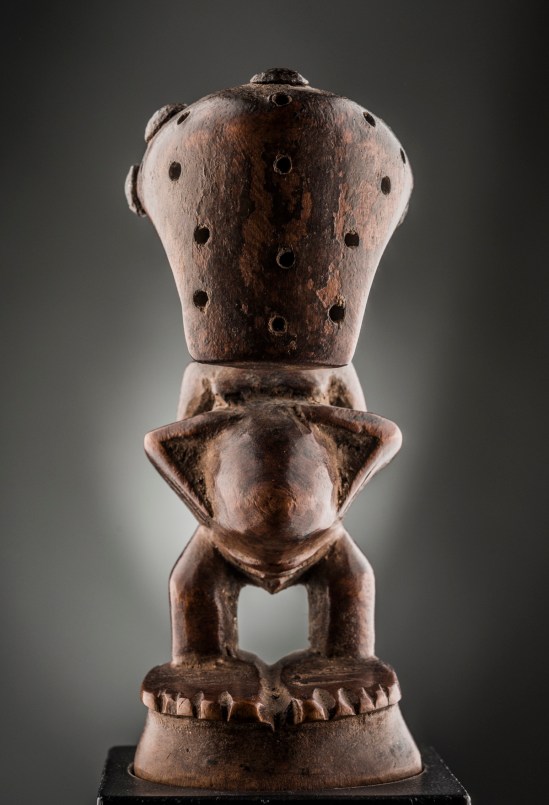
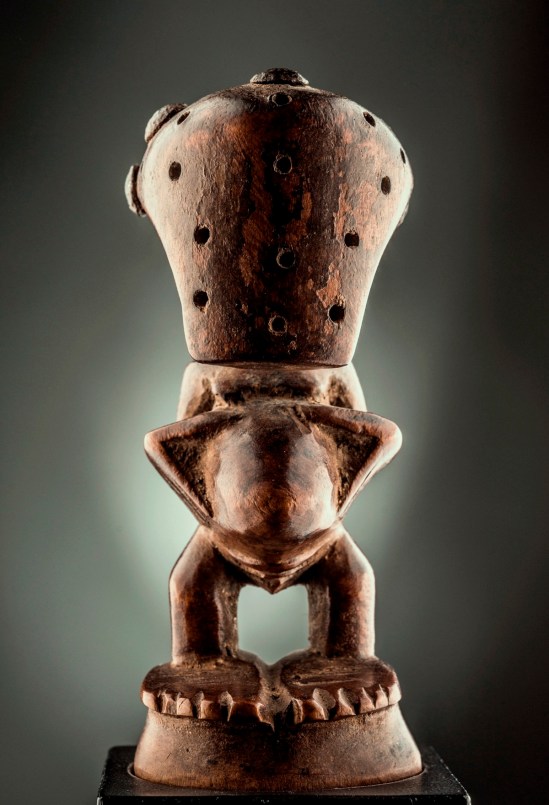
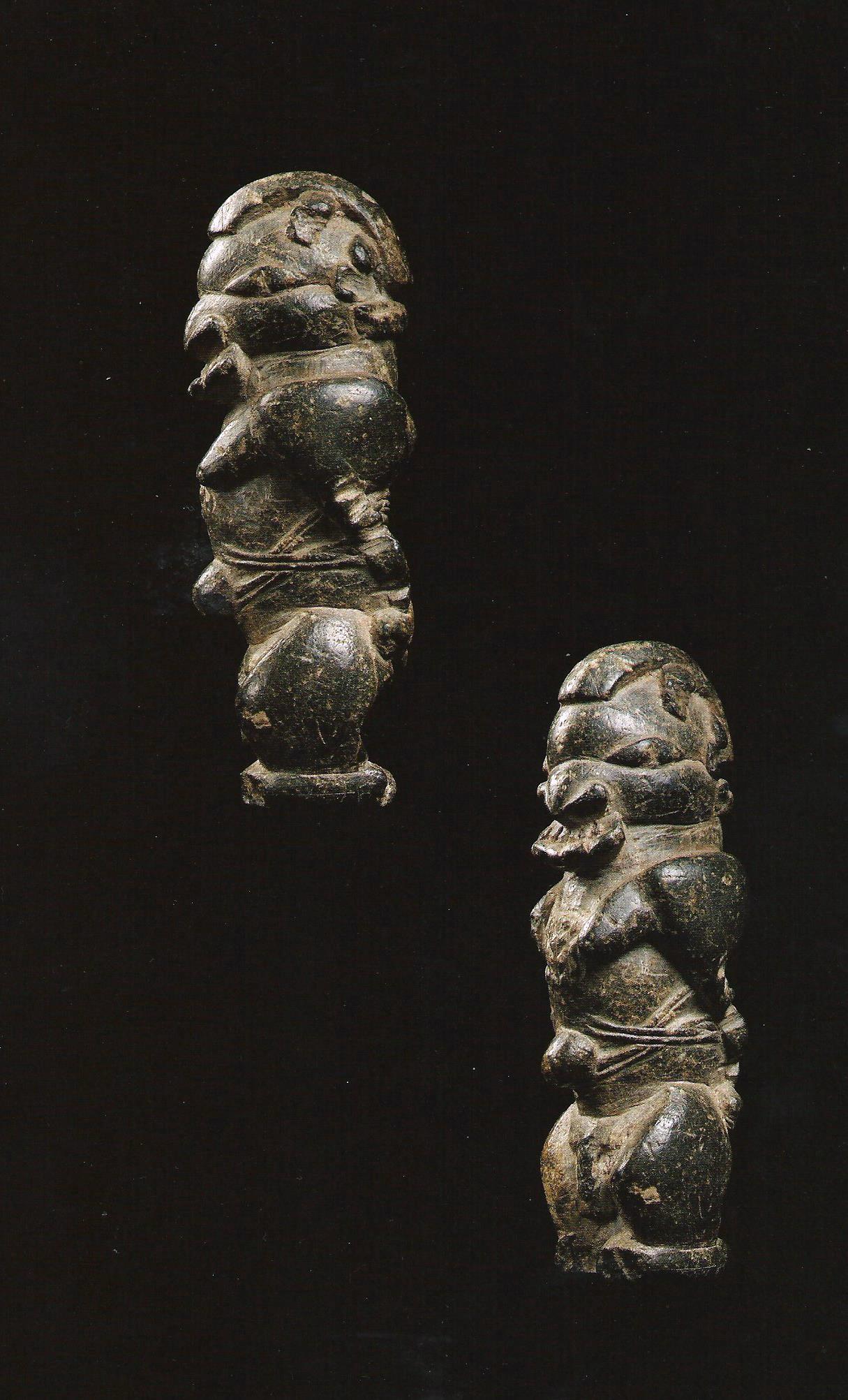
Songye people, N’kisi figure, Province du Lomami nord/ouest, Eki, Sanga ou Kalebwe

Bois, métal
H. 4,3 in./cm. 10,8

Provenance:

Ex coll. J.W. Mestach – Bruxelles
Ex coll. Dalton-Somaré – Milano

Exhibition:

Sculture Africane in collezioni private italiane, Gall. Dalton-Somaré, Milano, 2004
L’Africa delle Meraviglie. Arti Africane nelle collezioni italiane. Musée Palazzo Ducale, Genova, 31 décembre 2010 – 5 juin 2011.

Published:

-Vittorio Carini, A Hidden Heritage – Sculture africane in collezioni private italiane, Milano, 2004, fig. 241, color
-Revue “Qui Brescia”, anno 1, n. 2, settembre 2004, Brescia, pag. 149, color
-Private correspondence Willy Mestach/ Elio Revera, Bruxelles.
-Bargna I, e Parodi da Passano G., L’Africa delle meraviglie – Arti africane nelle collezioni italiane, Genova, 2010, Silvana Editoriale, Cinisello Balsamo (MI), pag. 115, color
-Elio Revera, Negli occhi di un altro: lo sguardo “nero”, in Archeologia Africana-Saggi Occasionali, Anno 2012-2013, n.18-19, Milano, 2014, pag.54

Yale University Art Gallery N. 0058927-01


Le territoire Songye

“Dans la zone septetrionale du pays songye, d’ouest en est, du sud au nord, les sculptures se distinguent par la moltiplication des clous à la tête ronde.
Cette pratique semble s’être développée surtout dans le nord-ouest de la province du Lomami.


Courtesy F. Neyt “Songye”.

La présence des clous en lation sur le visage a donné lieu à diverses interprétations. Ces points pourraient se référer aux épidémie diverses que von Wissmann avait déjà constatées lors de son second voyage chez les Songye..
Enfin, ceux –ci peuvent avoir une signification protectrice liée à la foudre et à l’éclair.” (F. Neyt, 2004, pagg. 323, 324)


Songye Mestach front jpg

The Songye peoples have made numerous propitiatory objects against the smallpox.
The Songye territory, in fact, was devastated by this epidemic in the late ‘800 and early’ 900 and of course the tragedy also affected the neighboring population.
As remember Cyrille van Overbergh in his work Les Basonge, 1908, the Songye despite being one of the healthiest peoples of Congo, they were affected by the epidemic, although the number of deaths among these people was lower than that recorded between neighboring ethnic groups. (https://artidellemaninere.com/2014/10/28/contra-variola/)
How has this influenced the creation of many protection fetishes it is difficult to imagine it: the fact is that it is among the Songye which are found numerous minkisi realized for protection of smallpox.


Coll. Corlay

Il popolo Songye ha realizzato numerosi oggetti propiziatori per combattere la malattia del vaiolo.
Le terre Songye infatti furono devastate da questa epidemia tra la fine dell’800 ed i primi del ‘900 e naturalmente la tragedia interessò anche le popolazioni limitrofe.
Come ci ricorda Cyrille van Overbergh nel suo lavoro Les Basonge del 1908, i Songye pur essendo uno dei popoli più sani del Congo, furono interessati dall’epidemia, sebbene il numero dei decessi tra questa gente fu inferiore a quello registrato tra le etnie viciniori.
Come poi abbia influito sul diffondersi della malattia la realizzazione dei numerosi feticci di protezione è difficile immaginarlo: fatto sta, in ogni caso, che è comunque proprio tra i Songye che si riscontrano numerosi minkisi di siffatta tipologia utilizzati, molto probabilmente, contro l’epidemia del vaiolo.


Bibliography

-Van Overbergh, C. “Les Basonge”, Bruxelles, 1908
-Merriam A.P. “Culture History of the Basongye”, Bloomington, 1974
-Mestach J.W. “Etudes Songye. Formes et symbolique, essai d’analyse”, Munich, 1985
-Anthoine C.H.R. “Le système magico-religeux des Songye”, Bruxelles, 1988
-Neyt F. “La Redoutable Statuaire Songye d’Afrique Centrale”, Fonds Mercator, Anvers – 5 Continents, Milano, 2004
-Petridis C. “Art and Power in the Central African Savanna: Luba. Songye. Luluwa. Chokwe”, Mercator Fonds, Bruxelles, 2008
-Volper J. “Autour des Songye. Under the influence of the Songye”, Fine Art Studio Publishing-Gourcuff Gradenigo,2012

Wama e mbu: i due contendenti dell’Ubangi

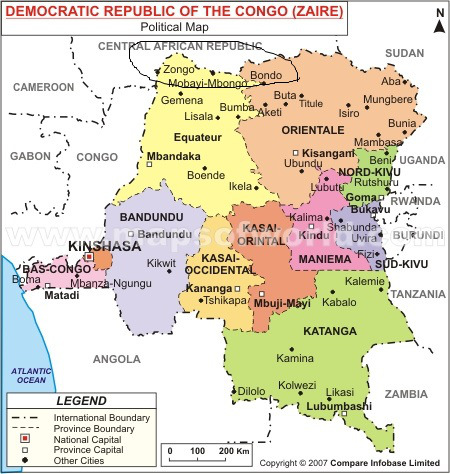
La complessa area dell’Ubangi, corrispondente a territori della Repubblica Centrafricana  meridionale e del Congo settentrionale, è già stata descritta nel mio precedente lavoro “Laggiù nell’Ubangi!”(https://artidellemaninere.com/2015/02/15/laggiu-nellubangi/).
mapa-c

Un mosaico di etnie spesso in conflitto, ma ricche di una complessa mistica indigena ancora non sufficientemente indagata sia sul piano prettamente religioso che su quello antropologico ed estetico.
Nell’articolo “Il dubbio ed il certo” (https://artidellemaninere.com/2015/02/06/il-dubbio-ed-il-certo/) emergevano infatti tutte le difficoltà di una precisa attribuzione degli oggetti rituali appartenenti alle varie etnie che popolano quella regione.
In questo lavoro, provo a descrivere le linee fondamentali di quella mistica indigena sopra richiamata, alla luce delle attuali conoscenze in merito.

Ubangi carta geografica

Territorio dell’ Oubangi (Courtesy Tribal Art)

Come ha scritto A.M. Vergiat, “ Pour la majorité des peoples de l’Oubangui, il y a dans chaques individu:
a) Le corps;
b) L’ombre ou duble du corps;
c) L’âme immatérielle ou esprit.
Ces trios choses réunies forment l’homme. L’ombre est insparable du corps tant qu’il vit.
L’âme peut quitter momentanément et agir au dehors. Quand un individu dort, son âme est absente du corps, elle erre à travers le pays. A son returne, le corps s’anime et se reveille, il peut agir sous l’action de l’âme… formée de deux forces occultes adverses.
Ces forces sont:
Le souffle vital ou force dynamique qui nous pousse à l’action qui nous entraine dans le tourbillon de la vie, qui nous fait gouter les charmes, qui nous  procure le ris et la joie force éminemment brutale et toute matérielle et sensuelle.
La force statique, que d’aucuns appellant conscience, qui freine nos emportements, régularise nos désirs et nous empeche de commetre des folies. Pouissance conservatrice et prudentequi nous fait préferér le calme, l’ombre, la solitude et l’immobilité au movement, à la lumière et à la joie, force toute morale et spirituelle.
Ces deux forces s’opposent, leur lutte est constante” (A .M.Vergiat, 1936).
e

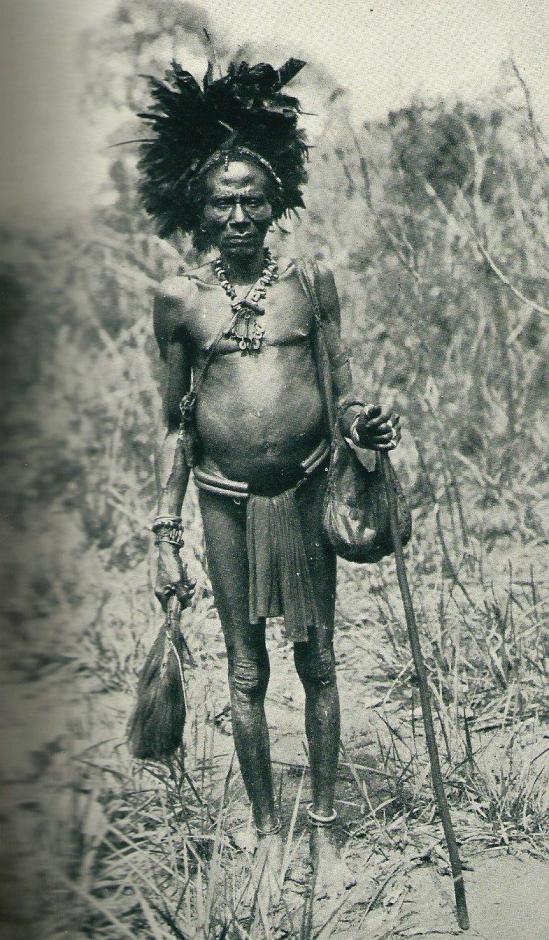
Circoncisore Manja (Courtesy A.M. Vergiat,  Les rites sectrets des primitives de l’Oubangui”, Parigi, 1936)

Per chi è minimamente a conoscenza della struttura psichica delineata dai padri fondatori della psicanalisi/psicoanalisi, Freud ed Jung, la descrizione fatta da Vergiat della psiche dell’uomo Oubangese, appare fin troppo aderente alla struttura psichica occidentale con tanto di Io, Es e perfino con il richiamo junghiano all’ombra.

Prediamo un testo quasi coevo di quello di Vergiat riguardante la dottrina psicoanalitica, quello di Enrico Morselli, La Psicanalisi, pubblicato esattamente dieci anni prima nel 1926,  uno dei primi trattati italiani riguardati la teoria freudina, se non il primo, editi in Italia dai Fratelli Bocca di Torino.

Scrive Morselli a proposito della struttura psichica dell’uomo, “… la coscienza comprende soprattutto il Mondo razionale fatto di analisi e di sintesi, di attribuzioni e di valutazioni, di riflessioni e di associazioni logiche…la sua anticamera buia è l’Incosciente nel quale si accumulano tutte le tendenze primitive, le più maligne, sconvenienti e perverse…insomma per Freud la vita psichica consiste in un continuo “antagonismo” di due gruppi di “forze psichiche” che si sviluppano l’una a detrimento dell’altra: le incoscienti e le coscienti”.

Sono evidenti le assonaze descrittive utilizzate da Vergiat e da Morselli per descrivere la struttura psichica del “primitivo” e del “civilizzato” e , sebbene l’interpretazione del pensiero freudiano nel corso dei decenni successivi sia in gran parte mutata, ho utilizzato il testo di Morselli proprio perchè coevo di quello di Vergiat, proprio perchè entrambi sono scaturiti da un medesimo humus culturale.

E’ pertanto dall’antagonismo tra le due forze, quella dinamica e quella statica, che l’individuo dell’Oubangi costruisce il proprio equilibrio in armonia con la sua gente, il suo ambiente e la natura che lo circonda.
A differenza dell’uomo occidentale, però, quello dell’Oubangi ha una visione alquanto differente della sofferenza, della malattia e della morte.

u

…all’opera! ( Courtesy op. citata)

Continua Vergiat”La sourance, la maladie, la mort sont anormales, ells n’ont pas des causes naturelles por l’indigène.
La douleur est attribuée à un être, esprit ou animal qui ronge l’organisme du malade et amènera rapidement sa mort si on ne l’extirpe pas à temps, ou bien ce sont des betes de la brousse qui se vengent envers les hommes. Beaucoup d’affections son ten effect, attribuées à des animaux…Parfois ce seront des exprits nuisibles qui hanteront son corps et le feront souffrir et délirer, à mois q’il ne soit l’objet d’un sort, d’un maléfice, et victim de la méchanceté d’un de ses semblantes.
Toute maladie interne, inexplicable, indéfinissable, ne tombant pas directement sous la vue, comme les maux de langueur, a une origine d’ordre magique” (A.M.Vergiat, 1936).
Per questo, è essenziale poter contare sulla sapienza, dedizione e capacità di un individuo superiore in grado di individuale, comprendere, controllare ed annientare lo spirito maligno che ha perturbato l’ordine naturale delle cose.
L’individuo che può incarnare un ruolo tanto complesso non è un individuo qualunque, bensì un uomo che dopo lungo tirocinio ha assunto la forza, la sicurezza e la conoscenza indispensabili nella lotta con lo spirito negativo: questo individuo superiore è chiamato Wama.

3

Féticheur dell’Oubangi ( Coutesy op. citata)

Ha scritto di lui G.V. Sévy:
Le Wama, avant toute chose, il est médecin a la fois du corps et de âme opérant toujours dans une perspective magique car pour lui la maladie est jamais naturelle. Les responsables peuvent en être les mbu ou des êtres invisibles et néfastes du monde surnaturel.
Pour les N’gbaka mbu est le nom donné aux sorciers.
Le plus souvent est un mbu que le Wana est amené combattre est un être méchant et jaloux qui accomplit ses maléfices que dans les ténèbres”.  (Cahiers d’étude africanais, 1960)
E maggiore è il maleficio da combattere, più rinomata deve essere la grandezza del Wama chiamato a dirimere la questione: non tutti i Wama, infatti, hanno la potenza necessaria per cacciare i cattivi genii o per lottare contro certi mbu particolarmente abili ed insidiosi.
Il grand Wama una volta che ha accettato l’incarico, si installa con tutte le sue donne nella casa messagli a disposizione e da tutti i villaggi vicini la gente accorre per vederlo danzare e lottare contro lo mbu.
Non molto diversa è la figura del moderno esorcista chiamato a scacciare il maligno in una civilissima dimora di New York, Roma o Parigi!!

Come nel resto dell’Africa, anche in Oubangi forte è la presenza di società segrete desinate a regolare la vita spirituale e materiale dei villaggi. Ngakola, Maoro, Badagi sono le società segrete tra le maggiormente conosciute di quest’area, sebbene reconditi rimagano ancora tanti aspetti del loro funzionamento.

Tra i riti d’iniziazione più conosciuti, quello denominato Gan’za è di particolare rilievo per la sua spettacolarità ed importanza.

Durante questo rito, infatti, i giovani iniziati sono sottoposti alla circoncisione rituale (maschi) ed all’escissione clitoridea (femmine) attraverso complesse cerimonie, danze, gesti e simbologie che consacrano il passaggio dall’adolescenza alla compiuta età adulta.

Giova ricordare che l’escissione clitoridea non è praticata da tutte le popolazioni dell’Oubangi. Presso i Mbakwa, Ali, Banzélé, Songo, Yakoma e Nzakara infatti, le femmine non sono sottoposte a questa mutilazione.

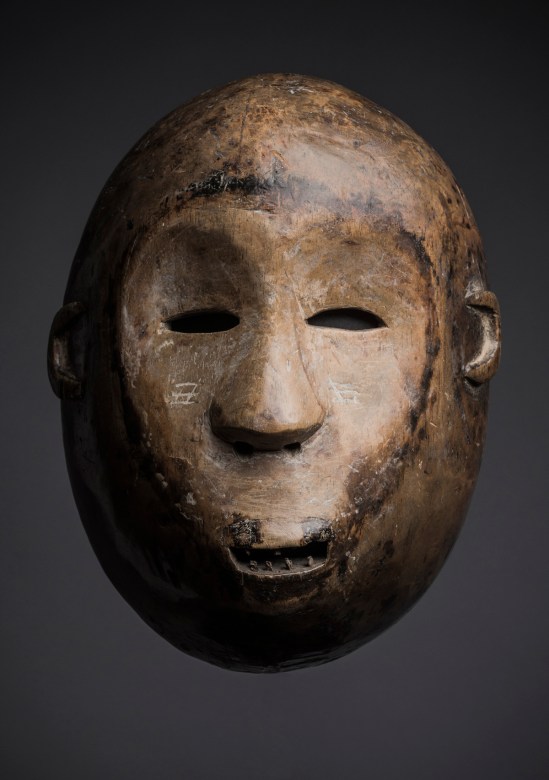
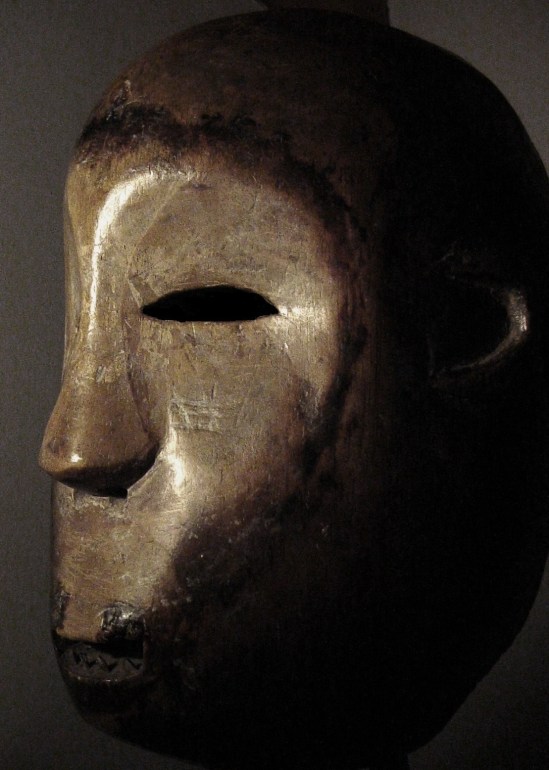
Alcune maschere antropomorfe denominate Dagara erano utilizzate dalle autorità preposte alla gestione delle pratiche iniziatiche, ed in particolare durante le danze conseguenti i festeggiamenti per il ritorno dei neo-adulti, dopo l’isolamento di vari mesi e le dure prove a cui dovevano sottoporsi nei riti d’iniziazione. ( J.Cornet, 1972)
Ngbaka front jpg

Maschera policroma Dagara (cm. 30,5), cultura N’gbaka, Coll. Privata Italia. I tatuaggi sul volto sono quelli tradizionali di quest’area.

Ngbaka tre quarti jpg

Bibliografia.

-E. Morselli, La Psicanalisi, Bocca Ed., Torino, 1926

-M.J. Leyder, Conception des Bwaka sur les astres (Rev. univ. Bruxelles, déc. 1931 – janv. 1932

-M.J. Leyder, Maseko  et  Sia , obligation de conciliation et droit de moquerie chez les Bwaka, Bulletin des Alumni, avril 1932

M.J. Leyder, Trois études sur les « To », Contes Bwaka, Le Flambeau, juin, juillet, août 1932

-F. Clayes, Gaza de besnijdenis bij de Bwaka, Ubangi, Gaza la circoncision chez les Bwaka Oubangui,  Congo, sep 1931, 223-241, oct 1931, 381-396, nov 1931 506-533, Chants rituels ngbaka dans la langue origine et en traduction néerlandaise

-A.M. Vergiat, Les rites secrets des primitifs de l’Oubangui, Payot, Paris, 1936

-G.V. Sévy, Les wama des Ngbaka de la Lobaye, in Cahiers d’études africaines, Vol. 1 N. 3, 1960, pp 103/128
 

008 (2)


Elio Revera


Wama and mbu: the two contenders in Ubangi

The complex area of ‘Ubangi, corresponding to areas of the Central African Republic and south of the northern Congo, has already been described in my previous job “Laggiù nell’Ubangi” (Http://artidellemaninere.com/2015/02/15/laggiu-nellubangi /).

A mosaic of ethnic groups often conflicting, but rich in a complex mystical indigenous still not sufficiently investigated both on a purely religious on the anthropological and aesthetic.
In the article “The doubt and certain” (https://artidellemaninere.com/2015/02/06/il-dubbio-ed-il-certo/) emerged in fact all the difficulties of a precise allocation of ritual objects belonging to various ethnic groups that inhabit the region.
In this paper, I try to describe the essential features of that mystical indigenous mentioned above, in the light of current knowledge about.

As it is written by A.M. Vergiat,“ Pour la majorité des peoples de l’Oubangui, il y a dans chaques individu:
a) Le corps;
b) L’ombre ou duble du corps;
c) L’âme immatérielle ou esprit.
Ces trios choses réunies forment l’homme. L’ombre est insparable du corps tant qu’il vit.
L’âme peut quitter momentanément et agir au dehors. Quand un individu dort, son âme est absente du corps, elle erre à travers le pays. A son returne, le corps s’anime et se reveille, il peut agir sous l’action de l’âme… formée de deux forces occultes adverses.
Ces forces sont:
Le souffle vital ou force dynamique qui nous pousse à l’action qui nous entraine dans le tourbillon de la vie, qui nous fait gouter les charmes, qui nous  procure le ris et la joie force éminemment brutale et toute matérielle et sensuelle.
La force statique, que d’aucuns appellant conscience, qui freine nos emportements, régularise nos désirs et nous empeche de commetre des folies. Pouissance conservatrice et prudentequi nous fait préferér le calme, l’ombre, la solitude et l’immobilité au movement, à la lumière et à la joie, force toute morale et spirituelle.
Ces deux forces s’opposent, leur lutte est constante” (A .M.Vergiat, 1936)


For who have some basic knowledge of the psychic structure outlined by the fathers of psychoanalysis  Freud and Jung,  Vergiat’s description of the human Oubangese psyche, it appears all too adherent to the western psychic structure with ego, es  and even with the notion of Jungian shadow.

Take a text almost contemporary with that of Vergiat concerning the psychoanalytic doctrine, that of Enrico Morselli, The Psychoanalysis, published exactly ten years earlier in 1926, one of the first Italian treaties regarded theory freudina, if not the first, published in Italian by the Bocca brothers of Turin.

Morselli writes about the psychic structure of man, “… consciousness includes especially the World made rational analysis and synthesis, and evaluation of assignments, reflections and logical associations … its dark anteroom where is the Unconscious accumulate all the primitive tendencies, the most malignant, unreasonable and perverse … so for Freud psychic life consists of continuous “antagonism” of two groups of “psychic powers” that develop at the expense of the other one o’clock: “the unconscious and conscious “.

There are clear assonaze ​​descriptive used by Vergiat and Morselli to describe the psychic structure of the “primitive” and “civilized” and, although the interpretation of Freudian thought in the subsequent decades is largely changed, I used the text of Morselli just because contemporary with that of Vergiat, just because both are sprung from the same cultural background.

And ‘therefore the antagonism between the two forces, the dynamic and static, that the individual dell’Oubangi finds its equilibrium in harmony with its people, its environment and the natural surroundings.
Unlike Western man, however, that dell’Oubangi has a somewhat different vision of suffering, disease and death.

Continue Vergiat …”La sourance, la maladie, la mort sont anormales, ells n’ont pas des causes naturelles por l’indigène.
La douleur est attribuée à un être, esprit ou animal qui ronge l’organisme du malade et amènera rapidement sa mort si on ne l’extirpe pas à temps, ou bien ce sont des betes de la brousse qui se vengent envers les hommes. Beaucoup d’affections son ten effect, attribuées à des animaux…Parfois ce seront des exprits nuisibles qui hanteront son corps et le feront souffrir et délirer, à mois q’il ne soit l’objet d’un sort, d’un maléfice, et victim de la méchanceté d’un de ses semblantes.
Toute maladie interne, inexplicable, indéfinissable, ne tombant pas directement sous la vue, comme les maux de langueur, a une origine d’ordre magique” (A.M.Vergiat, 1936).

For this, it is essential to rely on the wisdom, dedication and ability of an individual superior individual can, understand, control and destroy the evil spirit that has disrupted the natural order of things.
The individual who can embody a role so complex it is not any one individual, but rather a man who after long training has taken on strength, security and knowledge essential in the fight with the negative spirit: this individual is called upper Wama.

She wrote him G.V. Sévy: “Le Wama, avant toute chose, il est médecin a la fois du corps et de âme opérant toujours dans une perspective magique car pour lui la maladie est jamais naturelle. Les responsables peuvent en être les mbu ou des êtres invisibles et néfastes du monde surnaturel.
Pour les N’gbaka mbu est le nom donné aux sorciers.
Le plus souvent est un mbu que le Wana est amené combattre est un être méchant et jaloux qui accomplit ses maléfices que dans les ténèbres”.  (Cahiers d’étude africanais, 1960)

And the greater the spell to fight, most famous has to be the size of Wama called to settle the matter: not all Wama, in fact, have the power to cast out evil geniuses or to combat certain mbu particularly skilled and treacherous.
The grand Wama once accepted the position, is installed with all his women in the house messagli available and all the neighboring villages people come to see him dance and fight against Mbu.
Not much different is the figure of the modern exorcist called to chase away the evil in a civilized home to New York, Rome or Paris !!

As in the rest of Africa, even in Oubangi stronger the presence of secret societies Dine regulate the spiritual and material life of the villages. Ngakola, Maoro, Badagi are secret societies among the best known in this area, although hidden rimagano still many aspects of their operation.

Among the best-known rites of initiation, one called Gan’za is of particular importance for its spectacular nature and importance.
555275_392579110837805_1826860773_n

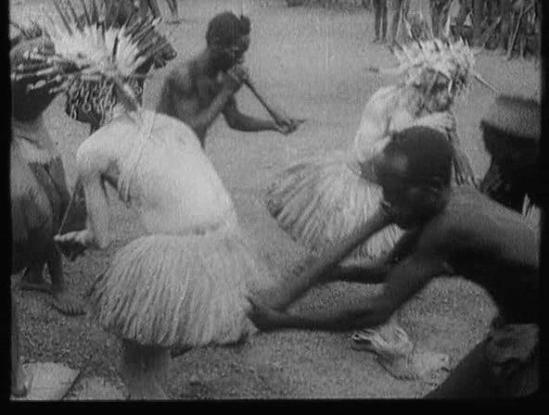
Gan’za, (Courtesy A.M. Vergiat,  Les rites sectrets des primitives de l’Oubangui”, Parigi, 1936)

During this rite, in fact, the young initiates are subjected to ritual circumcision (males) and clitoral excision (female) through complex ceremonies, dances, gestures and symbols that consecrate the passage from adolescence to adulthood accomplished.

To recall, the clitoral excision is not practiced by all populations dell’Oubangi. At Mbakwa, Ali, Banzélé, Songo, Yakoma and  Nzakara fact, females are not subject to this mutilation.

Some anthropomorphic masks called Dagara were used by the management authorities of the initiation practices, especially during dances consequent celebrations for the return of neo-adults, after the isolation of several months and the hardships they had to undergo in the rites initiation. (J.Cornet, 1972)

Bibliography.

-E. Morselli, La Psicanalisi, Bocca Ed., Turin, 1926

-M.J. Leyder, Conception des Bwaka sur les astres (Rev. univ. Bruxelles, déc. 1931 – janv. 1932

-M.J. Leyder, Maseko  et  Sia , obligation de conciliation et droit de moquerie chez les Bwaka, Bulletin des Alumni, avril 1932

M.J. Leyder, Trois études sur les « To », Contes Bwaka, Le Flambeau, juin, juillet, août 1932

-F. Clayes, Gaza de besnijdenis bij de Bwaka, Ubangi, Gaza la circoncision chez les Bwaka Oubangui,  Congo, sep 1931, 223-241, oct 1931, 381-396, nov 1931 506-533, Chants rituels ngbaka dans la langue origine et en traduction néerlandaise

-A.M. Vergiat, Les rites secrets des primitifs de l’Oubangui, Payot, Paris, 1936

-G.V. Sévy, Les wama des Ngbaka de la Lobaye, in Cahiers d’études africaines, Vol. 1 N. 3, 1960, pp 103/128

Elio Revera

Inestimable

To Herb e Dorothy Vogel.

Inestimable  is a good that once lost, is lost forever!
For art, that object transferred from a museum or a great collection, more than ever you can think of to reacquire or replace.


img_0012

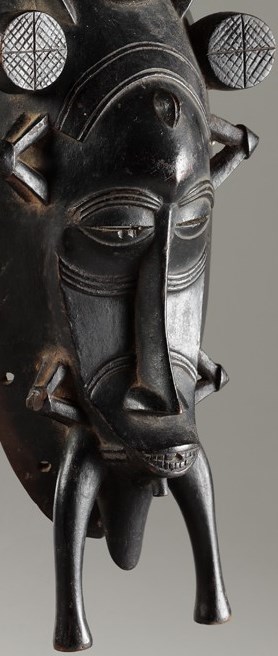
Senufo mask (part.). Private coll. Italy

The rest of us, and for me, very common passionate collector of African art, inestimable is that piece that joined into the collection, not only determines the added value of the entire collection, but is also irreplaceable for its uniqueness.


Yoruba Iroké Ifa (3)

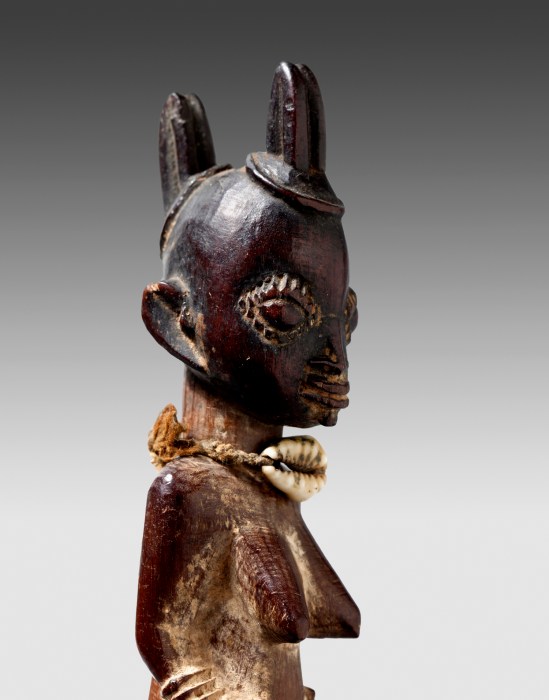
Yoruba Iroké Ifa (part.). Private coll. Italy

On closer inspection, a collection built with the criterion of the inestimable, albeit corrected by human tolerance, it is quite difficult and involves a strict control over the item in other posts I referred to as the criterion of quality.

I believe that right this differs a collection from an accumulation of nonsense and bizarre objects, except that this also can be a criterion, provided it is clear to those who put it into practice. Often, however, this awareness is far from being perceived, resulting in determining ingenuous collector a nagging frustration once he realized the poor quality of his collection.


yaka_011

Yaka mask (part.). Private coll. Italy

We return to the policy of the inestimable. It is clear that it is not a matter of money. It goes without saying that the money is an unavoidable unless a fabulous legacy, and perhaps even in this case.
And I mean money cannot be eliminated that resulting from a normal dignified profession, net of expenses that everyone faces to its existence.

The real question is that of the capacity assessment, eye, some luck, and above all the idea of collecting that determines choices and exclusions.

Inestimable is, therefore, the criterion that guides behavior, the logic of acquisition and disposal, risk awareness and the will to want to deal with.


Baoulé, KpleKple,Goli,part.corna

Baoulé, Goli mask (part.). Private coll. Italy

Here is an intuition that determines the criteria for collecting and bordering the perimeter of quality: those artifacts that for beauty, expressive coherence of the canon, the iconographic representation innovative and symbolic significance, not only representing himself same, but by summoning exclude absent.
Few objects, which by their presence enhances the deprivation of the many, that is not essential to possess.

And this is my personal idea of inestimable: what makes a legitimate absence and deprivation a form of possession and a conscious choice.


Songye Mestach front jpg (2)

Songye N’kisi. Private coll. Italy


Inestimabile

Inestimabile è quel bene che una volta perduto risulta perduto per sempre!
Per i beni artistici, quell’oggetto ceduto da un museo o una grande collezione, che mai si potrà più pensare di riacquisire o sostituire.
Per noi comuni mortali e per me, comunissimo appassionato collezionista di arte africana, inestimabile è quel pezzo che entrato in raccolta, non soltanto determina valore aggiunto dell’intera collezione, ma risulta poi davvero insostituibile per la sua peculiare unicità.
A ben vedere, una raccolta costruita con tale criterio dell’inestimabile, sia pur corretto da umana tolleranza, risulta alquanto difficile e comporta un ferreo controllo sull’elemento che in altri post ho definito come il criterio della qualità.
Ma, credo io, proprio qui si differenzia una collezione da una raccolta o peggio da un’accumulazione senza senso di strampalati oggetti, fatto salvo che anche questo può risultare un criterio, purché sia ben chiaro per chi lo mette in pratica. Sovente, però, questa consapevolezza è lontana dall’essere percepita, col risultato di determinare nell’ingenuo raccoglitore una fastidiosa frustrazione una volta resosi conto del basso livello qualitativo della sua collezione.
Ma torniamo al criterio dell’inestimabile. Sia chiaro che non è affatto una questione di denaro. Va da sé che il denaro è un elemento ineliminabile a meno di una favolosa eredità, e forse nemmeno in questo caso.
E per denaro ineliminabile io intendo quello derivante da una normale dignitosa professione, al netto delle spese che ognuno affronta per la propria esistenza.
La vera questione è quella della capacità di valutazione, di occhio, fortuna certo, e soprattutto di un’idea di raccolta che determini scelte ed esclusioni.
Inestimabile è, di conseguenza, il criterio che guida i comportamenti, la logica di acquisizione e di cessione, la consapevolezza del rischio e la volontà per volerlo affrontare.
Qui sta un’intuizione che determina il criterio di raccolta e che delimita il perimetro della qualità: quei manufatti che per bellezza, coerenza espressiva del canone, rappresentazione iconografica innovativa e significato simbolico, non soltanto rappresentano sé medesimi, ma per evocazione escludono gli assenti.
Pochi oggetti, che con la loro presenza valorizzano la privazione dei molti, che non è affatto indispensabile possedere.
E questa è la mia personale idea di inestimabile: ciò che legittima l’assenza e rende la privazione una forma di possesso e una scelta consapevole.

Elio Revera
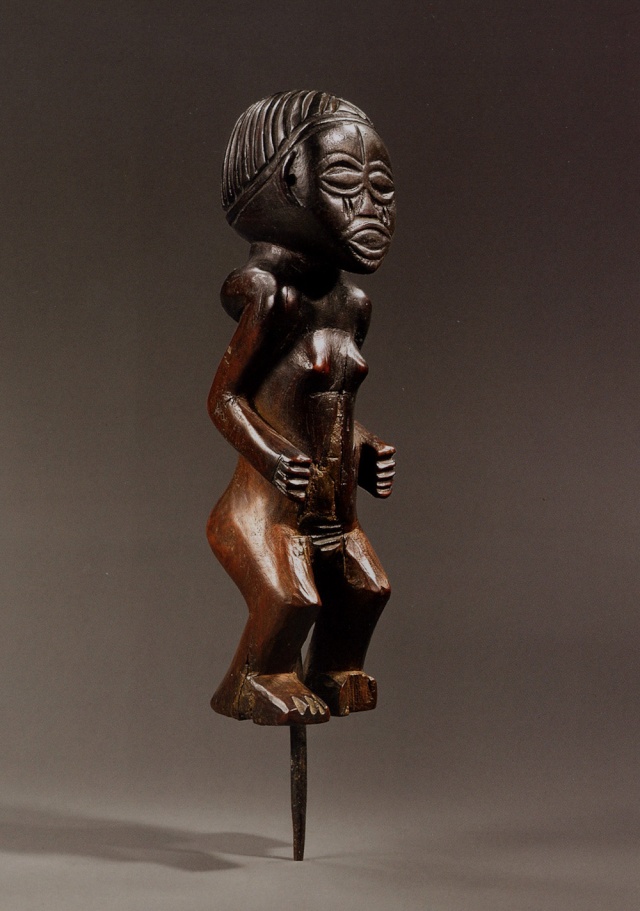
Agni people, Maternity Figure, Ivory Coast

Agni people, Maternity Figure, Ivory Coast

End of 19th century
Wood with black patina, beads.
H. 13,4 inch / 34 cm

Private collection, Milano
Photo by Hughes Dubois
Arti delle Mani Nere All Rights Reserved

Provenance
– Formerly in an old French collection
– Lucas Ratton, Paris, France

Exhibition
– Parcours des Mondes 2013, Paris, France

This Agni sculpture represents a maternity figure.
In Agni culture the spirits world is very important: statues and other sculptures are able to communicate with them.
This maternity was probably carved to thank a birth. It distinguishes itself by a high coif very finely carved and a black patina which reflects its age. It still has its old beads that were the symbol of beauty in Agni tribe.
The figure’s face is charming, dignified and proud, reminiscent of the memorial clay heads used in funeral rites, as well as the volumes of the slender body and hooked navel (almost a reference to the umbilical cord).
In contrast, the figure placed on the back – a child in the features but man in his bearing – held outside his gaze. All in a quiet dynamism.

Bibliography
– BACQUART Jean-Baptiste, The Tribal Arts of Africa, Thames&Hudson, London, 1998.
– RIVIÈRE Marceau, Arts Premiers de Côte d’Ivoire, Saint-Maur, 1997.
– ROBBINS and NOOTER, African Art in American Collections, Smithsonian Institution, USA, 1989.

Agni people, Maternità, Costa D’Avorio

Fine del 19mo secolo
Legno con patina scura, perline.
H. 13,4 inch / 34 cm

Collezione privata, Milano
Foto Hughes Dubois
Arti delle Mani Nere All Rights Reserved

Provenienza
– Vecchia collezione francese
– Lucas Ratton, Parigi, Francia

Esposizioni
– Parcours des Mondes 2013, Parigi, Francia

Questa scultura rappresenta una maternità.
Nella cultura Agni il mondo degli spiriti è molto importante: statue e altre sculture possono comunicare con loro.
Questa maternità fu probabilmente scolpita come ringraziamento per una nascita. La figura si distingue per l’alta capigliatura finemente scolpita e per la patina nera che ne riflette l’antichità. La statua possiede ancora le sue vecchie perline che erano il simbolo di bellezza fra gli Agni.
Nella figura è affascinante il volto, dignitoso e fiero, che ricorda le teste commemorative d’argilla usate nei riti funerari, cosi come i volumi slanciati del corpo e l’ombelico uncinato (quasi un rimando al cordone ombelicale).
Di contro, la figura posta sulla schiena – un bambino nelle fattezze ma uomo nel portamento – svolge lo sguardo all’esterno. Il tutto in un silenzioso dinamismo .

Bibliografia
– BACQUART Jean-Baptiste, The Tribal Arts of Africa, Thames&Hudson, London, 1998.
– RIVIÈRE Marceau, Arts Premiers de Côte d’Ivoire, Saint-Maur, 1997.
– ROBBINS and NOOTER, African Art in American Collections, Smithsonian Institution, USA, 1989.

Chi ha ucciso il mio desiderio?

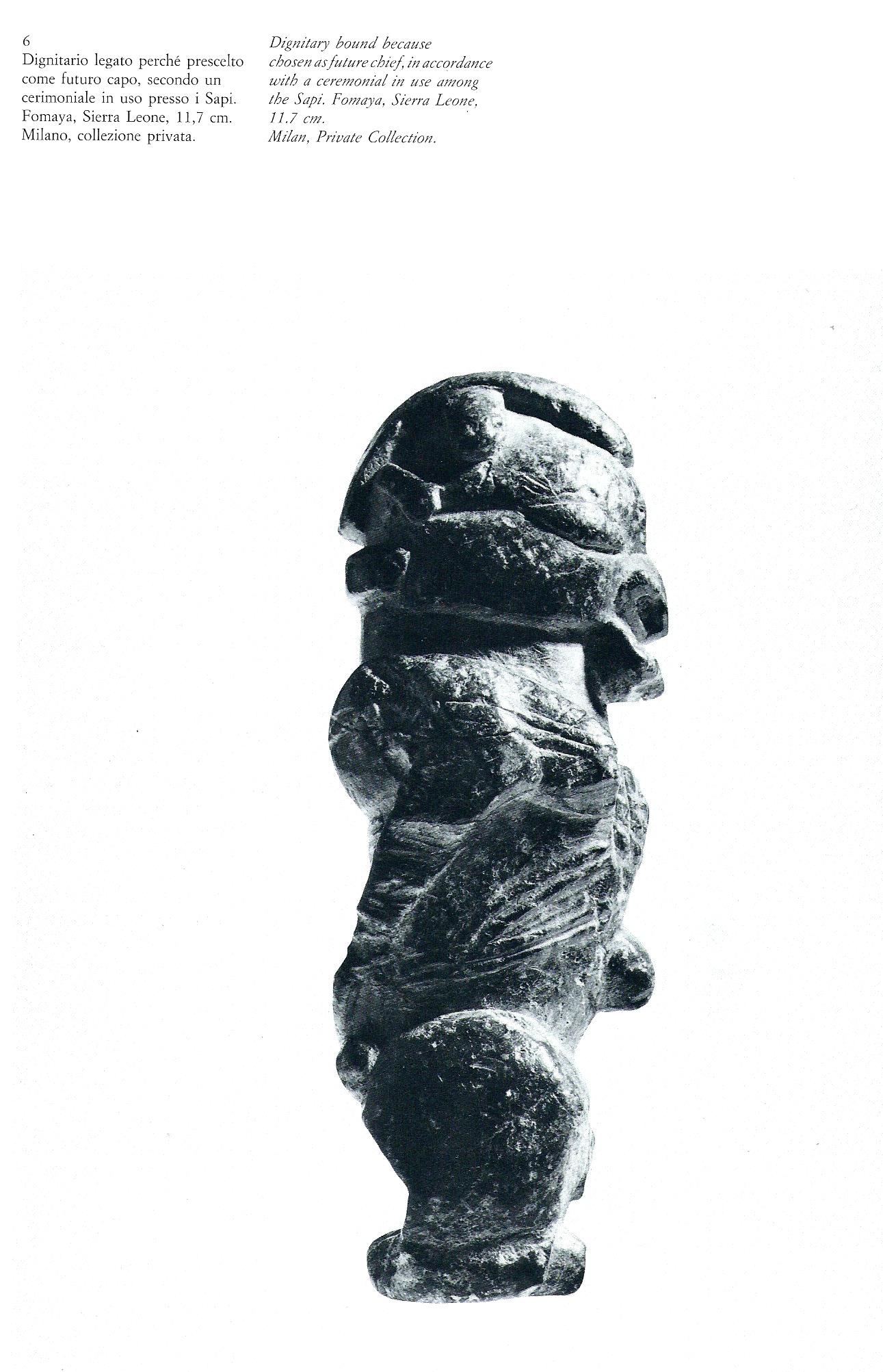
La recente scomparsa di René Girard, l’ultimo degli umanisti nella definizione di Roberto Esposito, (http://www.lemonde.fr/livres/article/2015/11/05/l-anthropologue-et-academicien-francais-rene-girard-est-mort_4803285_3260.html ed anche http://www.lefigaro.fr/vox/culture/2015/11/05/31006-20151105ARTFIG00249-religion-desir-violence-pourquoi-il-faut-lire-rene-girard.php) mi ha riportato alla memoria quanto ebbi a scrivere a proposito di una pregevole statuetta in pietra dell’antico Regno dei Sapi, in special modo a proposito della teoria del “capro espiatorio”. (https://artidellemaninere.com/2015/04/18/sapi-people-pomdo-bound-chief-stone-fomaya-area-eastern-sierra-leone/)

Kissi 2 (2)
(Courtesy A. Tagliaferri,” Pomdo, Mahen et Nomoli”, Esposizione Galleria Levy, Parigi, 2003)

E precisamente: “The sculptures representing a bound dignitary are worthy of note, quite apart from their aesthetic qualites, for they preserve and transmit the sacred significance of the institution of kingship. As we know, from René Girard for exemple, this developed out of the selection of a scapegoat used to liberate the tribe from the ills that afficted it; originally, it is likely that the king was killed, and in any case the existence, in Africa, of an ideology in which the ruler could-or should-be killed cannot be denied (Claessen,1981-Tagliaferri, 1989) “.

In una delle sue principali opere  (La violenza e il sacro, 1980), R. Girard infatti, sottolinea come la violenza che connota le società, può essere fronteggiata soltanto con l’individuazione di una vittima sacrificale, reale o immaginaria, sulla quale far confluire l’intera portata distruttiva. Un capro espiatorio appunto, una vittima sacrificale da immolare quale potente antidoto alla follia distruttiva dell’intera società.
Il valore sacrale del rito consiste appunto nella volontà di esorcizzare la violenza mediante il sacrificio di una vittima, al fine di contenere la naturale tendenza all’autodistruzione delle società.
Per interi secoli abbiamo assistito a questo rito, di volta in volta messo in scena contro singoli individui, gruppi sociali o addirittura intere popolazioni, come nel caso dell’olocausto nazista o ancora prima, nella tragica deportazione ed annientamento del popolo armeno.

o
(Courtesy A. Tagliaferri,” Fabulous Ancestor”, 1974)

In Girard, però, non è feconda soltanto la riflessione sulla teoria del capro espiatorio.
In un’opera precedente, infatti, (Menzogna romantica e verità romanzesca, 1965), il pensatore francese delinea un’ipotesi interpretativa del desiderio umano che integra e supera le teorie classiche precedenti, in special modo quella freudiana alla quale peraltro, è comunque debitore.
Il desiderio, ci suggerisce Girard non si esaurisce nel rapporto tra chi desidera e ciò che è desiderato, tra soggetto ed oggetto , bensì si sviluppa ed agisce alla presenza di una terza figura, estremamente importante e condizionante: la figura del desiderio dell’altro.
E’ infatti in questa dimensione triadica e non binaria che agisce il desiderio: vale a dire l’individuo desidera soprattutto ciò che è desiderato anche da altri.
Un’affermazione non da poco, soprattutto per chi ha sempre immaginato il desiderio come un puro aspetto pulsionale e volontaristico del singolo individuo.
In Girard questa dimensione individuale è contestualizzata in una visione sociale nella quale il desiderio mette in scena il condizionamento dettato dal parere/potere del desiderio condiviso.
In altre parole, noi desideriamo soprattutto quello che anche gli altri desiderano, vale a dire, noi siamo rassicurati nella nostra scelta soltanto e quando questa costituisce anche la scelta di altri.
Non è certo questa la sede per sviscerare le importanti implicazioni concettuali che derivano da questa riflessione, ma certo è il luogo per più semplici pensieri che riguardano il nostro mondo di appassionati delle Arti delle Mani Nere.
In una corrispondenza privata, Aldo Tagliaferri, il massimo conoscitore e studioso della antiche sculture in pietra della Sierra Leone e Guinea, mi ha scritto, in riferimento alla figura Sapi, e rivelandolo non svelo certamente una pur doverosa privacy…a mio giudizio è una figura di un’intrinseca finezza e costituisce un’importante documentazione storica ed etnografica…un giorno sarà chiaro che merita molto di più del suo valore venale.

eli
(Courtesy A. Tagliaferri, “Stili del potere”, 1989)

Tagliaferri ci suggerisce con le sue parole, il valore di scelte svincolate dal parossismo di mode, tendenze, consumi, scelte che mirino a ribadire il valore in sé e non soltanto il rispecchiamento dell’opinione condivisa.
E’ evidente che nessuno può sottrarsi integralmente al condizionamento di quello che Girard ha definito il desiderio degli altri, ma ciò non implica il doverlo subirlo passivamente in modo acritico!
Il valore di scelte individuali, vale a dire l’esercizio del desiderio personale, consiste appunto, a mio modo di vedere, nella capacità e nella forza di esercitare il proprio personale gusto, la propria personale ricerca e consapevolezza in quei territori in cui non si rispecchia l’opinione ed il giudizio di tanti se non di tutti.
Da qui la volontà di sperimentare nuove ipotesi ed interpretazioni, l’approfondimento di ricerche e studi che non siano soltanto l’eco condiviso del tempo, bensì il risultato di una maturazione individuale e solitaria.
Da qui l’apprezzamento collezionistico di estetiche non usuali, svincolate da facili e diffusi clichés omologati, che comportino, al contrario, l’esercizio individuale e consapevole del proprio pensiero e delle proprie convinzioni.
E per quel che mi riguarda, questo blog è proprio questo quel che vuol significare!

Elio Revera
English Translation

Who killed my desire?

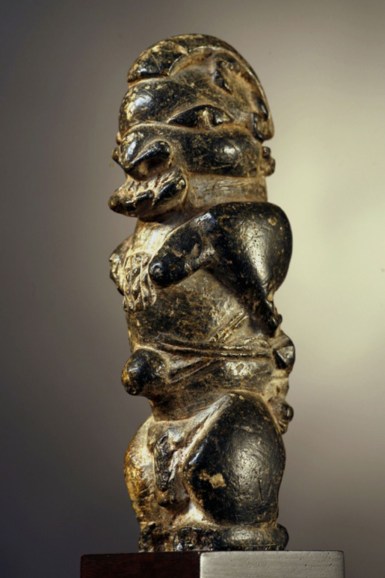
The recent death of René Girard, the last of the humanists in the definition of Roberto Esposito,(http://www.lemonde.fr/livres/article/2015/11/05/l-anthropologue-et-academicien-francais-rene-girard-est-mort_4803285_3260.html, and also, http://www.lefigaro.fr/vox/culture/2015/11/05/31006-20151105ARTFIG00249-religion-desir-violence-pourquoi-il-faut-lire-rene-girard.php) I brought back memories of what I wrote about a precious stone statue of the ancient Kingdom of Sapi, especially with regard to the theory of the “scapegoat”.(https://artidellemaninere.com/2015/04/18/sapi-people-pomdo-bound-chief-stone-fomaya-area-eastern-sierra-leone/)

Namely: The sculptures representing a bound dignitary are worthy of note, quite apart from their aesthetic qualites, for they preserve and transmit the sacred significance of the institution of kingship. As we know, from René Girard for exemple, this developed out of the selection of a scapegoat used to liberate the tribe from the ills that afficted it; originally, it is likely that the king was killed, and in any case the existence, in Africa, of an ideology in which the ruler could-or should-be killed cannot be denied (Claessen,1981-Tagliaferri, 1989) “.

In one of his major works (Violence and the Sacred, 1980), R. Girard in fact, noted that violence that characterizes the society, can be countered only with the identification of a sacrificial victim, real or imagined, on which to meet the full extent of destruction. Just a scapegoat, a sacrificial victim to be sacrificed as a powerful antidote to the destructive madness of the whole society.
The sacred value of the rite consists in the desire to exorcise the violence by the sacrifice of a victim, in order to curb the natural tendency to self-destruction of society.
For whole centuries we have witnessed this ritual, each time staged against individuals, social groups or even entire populations, as in the case of the Nazi Holocaust, or even before, in the tragic deportation and annihilation of Armenians.

Girard, however, is not only fruitful reflection on the theory of the scapegoat.
In an earlier work, in fact, (Deceit, Desire and the Novel, 1965), the French thinker outlines an interpretative hypothesis of human desire that integrates and surpasses the previous classical theories, especially the Freudian which however, is still the debtor .
The desire, Girard suggests not exhausted in the relationship between those who want and what is desired, between subject and object, but rather develops and acts in the presence of a third figure, extremely important and conditioning: the figure of desire.
And ‘in fact in this dimension triadic and not binary which it acts the desire: that is to say the individual desires above what is desired by others.
Not just an affirmation, especially for those who have always imagined desire as a pure instinctual and voluntary aspect of the individual.
Girard this individual dimension is contextualized in a vision of society in which the desire stages conditioning dictated by opinion / power of desire shared.
In other words, we wish especially that which also others desire, that is to say, we are reassured in our choice and only when this is also the choice of others.
This is certainly not the place to dissect the important conceptual implications that arise from this discussion, but it sure is the place for simple thoughts about our world of enthusiasts of the Arti delle Mani Nere.

In private correspondence, Aldo Tagliaferri, the ultimate connoisseur and scholar of ancient stone carvings of Sierra Leone and Guinea, he wrote, in reference to the figure Sapi, and revealing it certainly does not reveal even a dutiful privacy … in my opinion is a figure an inherent delicacy and an important historical documents and ethnographic … one day it will be clear that deserves much more than its market value.

Tagliaferri tells us in his own words, the value of decisions released by the paroxysm of fashions, trends, consumption, choices that aim to reaffirm the value in itself and not only the reflection of the opinion shared.
It ‘obvious that no one can fully escape the conditioning of what Girard has called the desire of others, but that does not imply having to suffer it passively uncritically!
The value of individual choices, that is, the exercise of personal desire, is in fact, in my view, in the ability and strength to exercise his personal taste, its own research and awareness in those areas where you do not reflects the opinion and judgment of many if not all.
Hence the desire to test new hypotheses and interpretations, the deepening of research and studies that are not only eco shared time, but the result of a maturing individual and solitary.
Hence the aesthetic appreciation of collecting unusual, released by easier and more widespread clichés approved, involving, on the contrary, the individual exercise and aware of their own thoughts and their own beliefs.
And as far as I’m concerned, this blog is exactly what it means!

Elio Revera
 

Sapi

Chokwe people, Female Statue, Shinji Figure, Uruunda Region (Lower Congo/Angola)

chokwe10

Wood with black and brown patina oozing on the face, resinous substance, iron
H.9,4 in/ 22.5 cm
19th century

Private collection, Italy
Photo by Hughes Dubois and Fabio Cattabiani
Arti delle Mani Nere All Rights Reserved

Provenance

-Constant Permeke (31. July 1886 Antwerpen – 4. January 1952 Ostende) painter, graphic artist and sculptor. He is looked upon as one of the most important representatives of the flemish expressionism.
-Didier Claes Gallery, Bruxelles
-Richard Carchon coll., Parigi
-Raquel y Guilhem Montagut Gallery, Barcellona

Exhibition

-“Tentoonstelling Afrikaanse kunst en Permeke”, Provinciaal Museum Constant Permeke, West –Vlaanderen, België, 30 oktober/ 27 november 1977
-“Bruneaf, Brussels Non European Art Fair”, Bruxelles, XXIII Ed. 05-09/06/2013
Africa. La terra degli spiriti. Museo delle Culture (Mudec), Milano, 27 marzo/30 agosto 2015Africa_bassa

Published

-Bettina von Lintig, Hugues Dubois “African Impressions. Tribal Art and Currents of life”, pag. 128, 129 and 233, color
Bruneaf, Cat. Exposition XXIII Ed, 2013, pag. 96, 97 color
Connaissance des Arts, n. 716, June 2013, pag. 125, color
Le Journal des Arts, n.392, Maggio/Giuno 2013, color
Tribal, n. 68, Sammer 2013, pag. 32 and 65, color
– Elio Revera “Africa. La terra degli spiriti”, Qui Brescia, n.107 Marzo 2015, pag. 106, color
– Elio Revera “Africa. La terra degli spiriti”, Qui Bergamo, Marzo 2015, pag.101, color
-AA.VV, Africa. Terra degli spiriti, a cura di Gigi Pezzoli e Claudia Zevi, 2015, Milano, 24 Ore Cultura ed. pag. 244 color

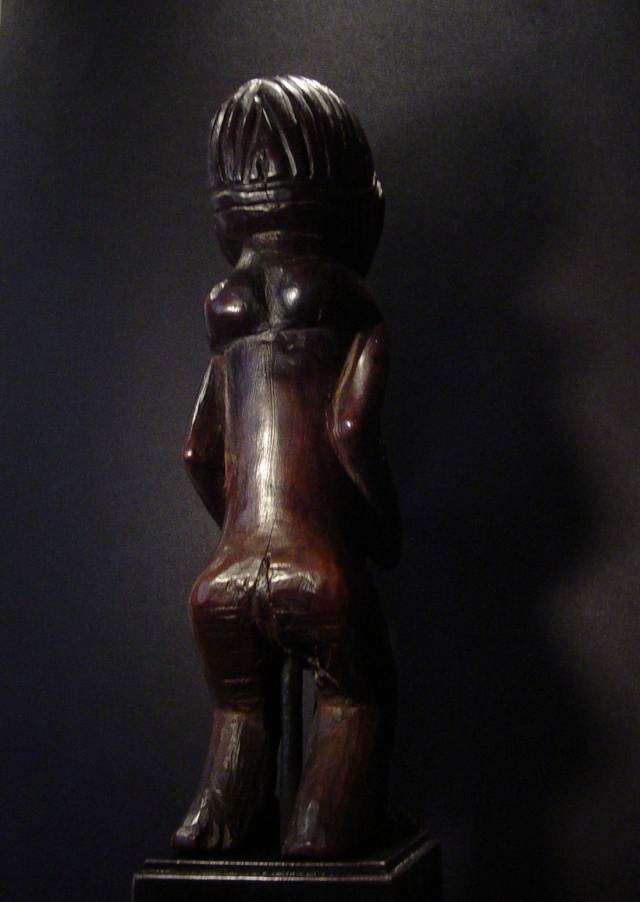
Like the previous sculpture, this one, most probably, is the representation of a Shinji, that of the female figure related to the cult of initiation in Mwali (M. Jordan). (http://artidellemaninere.forumattivo.it/t1068-chokwe-people-female-statue-shinji-figure-uruunda-region-lower-congo-angola)

Like the previous, it is a female sculpture with the head and face sweating for long and repeated libation and rituals purpose. The signs of scarification on the face are the same and in this sculpture, instead of the belt as in the previous one, is visible a set of longitudinal incisions in the pubes.

dsc00111

Two rare Chokwe sculptures that fate brought together in this virtual space.

The presence of cavities on the head, in the stomach and anal used to contain the “magic substance” is attributable to the magical / religious purpose and the possible use of this piece in divination.

“This compact little object has concise forms. Seem from profile, the figure has a pleasing rhythm. The convex shoulder blades work with the arms to produce a sculptural result which is reminiscent of that seen in works from distant neighbouring groups, such as the Yaka or the Suku. The face and the coif are rendered with linear grooves and incisions. The manner in which the chin comes to a point gives the face a heart-shaped form.

The patina is dark and oozing on the face, and alternates between black and brown on the body.
Is this a representation of a Mukishi of a Hamba, or of both at once? A Hamba (pl. Mhamba) is an ancestral or nature spirit to which a cult is dedicated. Mhamba are represented by trees, pieces of termite mounds, intentionally simplified figurines and by masks”. ( B.von Lintig, 2011)

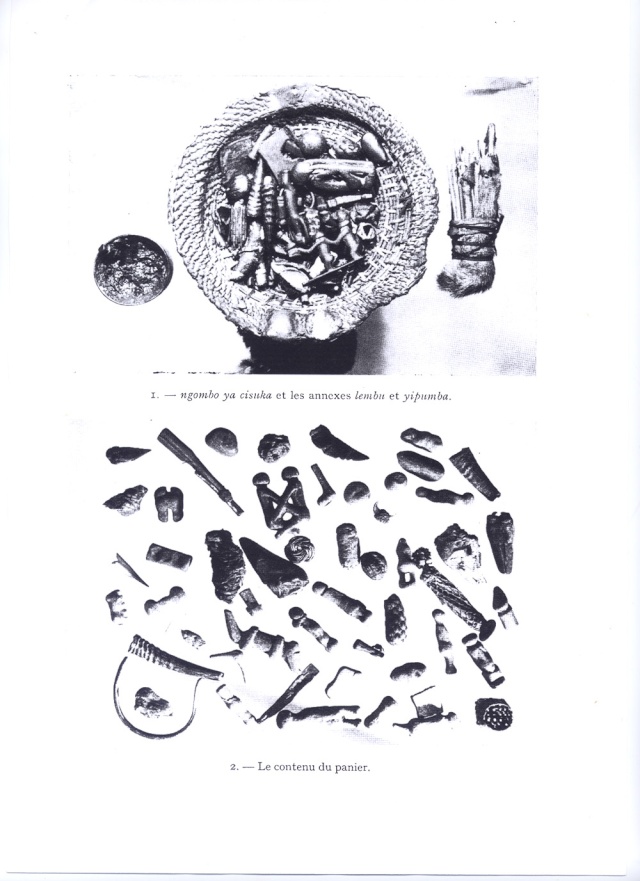
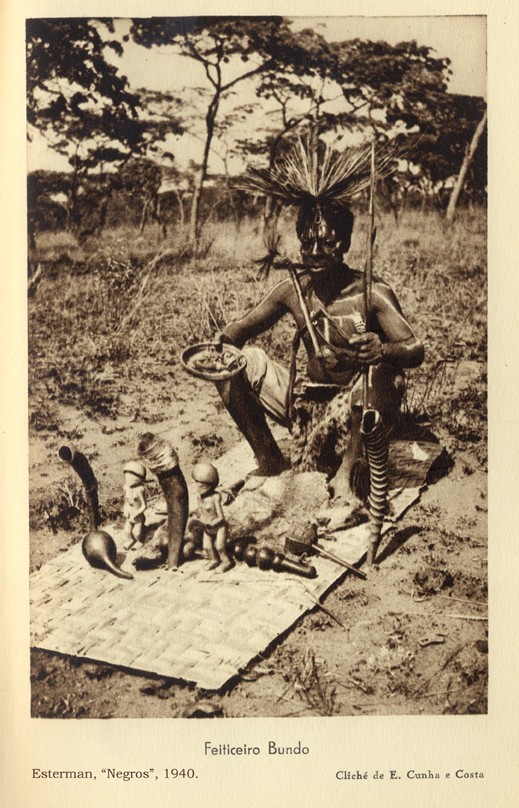
“Les sociétés sans écriture ont développé des méthodes parfois assez complexes de communication. Parmi celles-ci, on peut situer une des techniques divinatoires des Tshokwe, technique qu’eux-mêmes nomment ngombo y a cisuka, ce qui signifie « technique divinatoire de secouer ». En effet, elle consiste à secouer un ensemble d’objets ( 60/100) dans un panier ou un plateau et à établir une « lecture » des faits à partir de ceux qui, après une secousse, émergent à la surface.

senza_11
( Courtesy “Journal des africanistes”, 1976, Tome 56, Fascicule 1-2, p.p.105/125).

Ngombo, l’esprit de divination. La technique divinatoire ngombo ya cisuka naît dans le cadre rituel de transmission de l’hamba (pl. mahamba), concept fondamental pour définir les croyances magico-religieuses des Tshokwe ; en effet les mahamba réalisent la continuité entre le monde des vivants et celui des morts.C’est ainsi qu’un devin prestigieux ne peut pas disparaître sans que, tôt ou tard, il n’ait transmis son esprit à un de ses familiers par la médiation d’une possession qui, accueillie et maîtrisée dans le rituel, deviendra bénéfique. Le nouveau possédé exercera le métier de son ancêtre et ainsi, la continuité du prestige préservera l’intégrité du groupe.” (M.L. Rodriguez de Areia, 1976)

esterm10
Diviner Uruunda Region (Courtesy “Negros”, Padre Carlos Estermann e Elmano Cunha e Costa, Lisboa 1941)

Bibliography

-Bastin, Marie Louise. “Art decoratif tshokwe” 2 vols. Lisbon: Companhia de Diamantes de Angola, Servicos Culturais, 1961
-Rendinha José. “Portugal Angola. Album Etnográfico”. C.I.T.A ed. Angola, 1967
– Bastin, Marie Louise. “Les styles de la sculpture tshokwe”. Arts d’Afrique Noir 19 (autumn 1976): 16-35
– Bastin, Marie Louise. “La sculpture tschokwe”. Meudon, France: A. and F. Chaffin, 1982
– Jordán, Manuel, “Chokwe! Art and Initiation among Chokwe and Related Peoples” (exh. Cat. Birmingham Museum of Art, Alabama). New York: Prestel, 1998.
-von Lintig, Bettina- Dubois, Hughes.”Africans Impressions.Tribal Art and Currents of Life”, Milano, 5 Continents Ed., 2011

(For the Hamba ritual)
-Hauenstein (A.), 1961. “La corbeille aux osselets divinatoires des Tchokwe” , Angola, Anthropos,
LVI, 1-2, 1 14-157.
-Mesquitela Lima (A.G.), 1971 “Fonctions sociologiques des figurines de culte hamba dans la société et dans la culture tshokwe” (Angola,Luanda, 1. 1. C. A.).
-Milheiros (M.), 1960. “A familia tribal” (Luanda, Museu de Angola).
-Milheiros (M.), 1967. “Notas de Ethnografia angolana” (Luanda, 1. 1. C. A.).
-Santos (E.), 1960, “Sobre a « medicína » e magia dos Quiocos”, Lisbonne, J. I. U.
-Tucker (L. S.), 1940. “The divining basket of the Ovimbundu”, Journ. Roy. Anthr. Inst.,
LXX, 171-201.
-Turner (V. W.), 1961. “Ndembu divination, its symbolism and techniques”, Manchester Uni
versity Press [The Rhodes-Livingstone Paper, n° 31].
-Turner (V. W.), 1971. “Syntaxe du symbolisme d’une religion africaine”, in Le comportement rituel chez l’homme et l’animal (Paris, Gallimard).
-Turner (V. W.), 1972. “Les tambours d’affliction” (Paris, Gallimard).
-White (С. M. N.), 1961. “Eléments of Luvale beliefs and rituals”, Manchester University Press,
Rhodes-Livingstone Paper n° 32.
-Rodriguez de Areia ( M.L.) 1976, “Le savoir mnémotechnique des Tshokwe de l’Angola” In: Journal des africanistes. Paris, Tome 46, fascicule 1-2. pp. 105-125.

chokwe22

Chokwe people, Female Statue, Shinji Figure, Uruunda Region (Lower Congo/Angola)

Legno a patina marrone e nera, sudante sul volto, sostanza resinosa, ferro

H.9,4 in/ 22.5 cm
Sec.XIX

Collezione privata, Italia
Foto di Hughes Dubois e Fabio Cattabiani
Arti delle Mani Nere All Rights Reserved

Provenienza

-Constant Permeke (31. July 1886 Antwerpen – 4. January 1952 Ostende) painter, graphic artist and sculptor. He is looked upon as one of the most important representatives of the flemish expressionism.
-Didier Claes Gallery, Bruxelles
-Richard Carchon coll., Parigi
-Raquel y Guilhem Montagut Gallery, Barcellona

Esposizioni

-“Tentoonstelling Afrikaanse kunst en Permeke”, Provinciaal Museum Constant Permeke, West –Vlaanderen, België, 30 oktober/ 27 november 1977
-“Bruneaf, Brussels Non European Art Fair”, Bruxelles, XXIII Ed. 05-09/06/2013
-Africa. La terra degli spiriti. Museo delle Culture (Mudec), Milano, 27 marzo/ 30 agosto 2015

Pubblicazioni

-Bettina von Lintig, Hugues Dubois “African Impressions. Tribal Art and Currents of life”, pag. 128, 129 and 233, color
– Bruneaf, Cat. Exposition XXIII Ed, 2013, pag. 96, 97 color
-Connaissance des Arts, n. 716, June 2013, pag. 125, color
-Le Journal des Arts, n.392, Maggio/Giuno 2013, color
-Tribal, n. 68, Sammer 2013, pag. 32 and 65, color
– Elio Revera “Africa. La terra degli spiriti”, Qui Brescia, n.107 Marzo 2015, pag. 106, color
– Elio Revera “Africa. La terra degli spiriti”, Qui Bergamo, Marzo 2015, pag.101, color
-AA.VV, Africa. Terra degli spiriti, a cura di Gigi Pezzoli e Claudia Zevi, 2015, Milano, 24 Ore Cultura ed. pag. 244 color

Come un’scultura, anche questa, con verosimile probabilità, è la rappresentazione dell’immagine di una Shinji, ovvero della figura femminile correlata al culto di iniziazione del Mwali ( M. Jordan).(http://artidellemaninere.forumattivo.it/t1068-chokwe-people-female-statue-shinji-figure-uruunda-region-lower-congo-angola)

Come la precedente, si tratta di una scultura femminile con la testa ed il viso esudanti per i lunghi e ripetuti versamenti ed utilizzi rituali . I segni di scarificazione sul volto sono gli stessi ed in questa scultura , invece della cintura come nella precedente, è visibile un corredo di incisioni longitudinali nella zona pubica.

Due sculture Chokwe rarissime nella loro tipologia che il destino ha riunito in questo spazio virtuale.

La presenza sul capo, nella parte ventrale ed anale di cavità destinate a contenere la “sostanza magica” è attribuibile alla funzione magico/religiosa a cui era destinata ed al suo probabile utilizzo divinatorio.

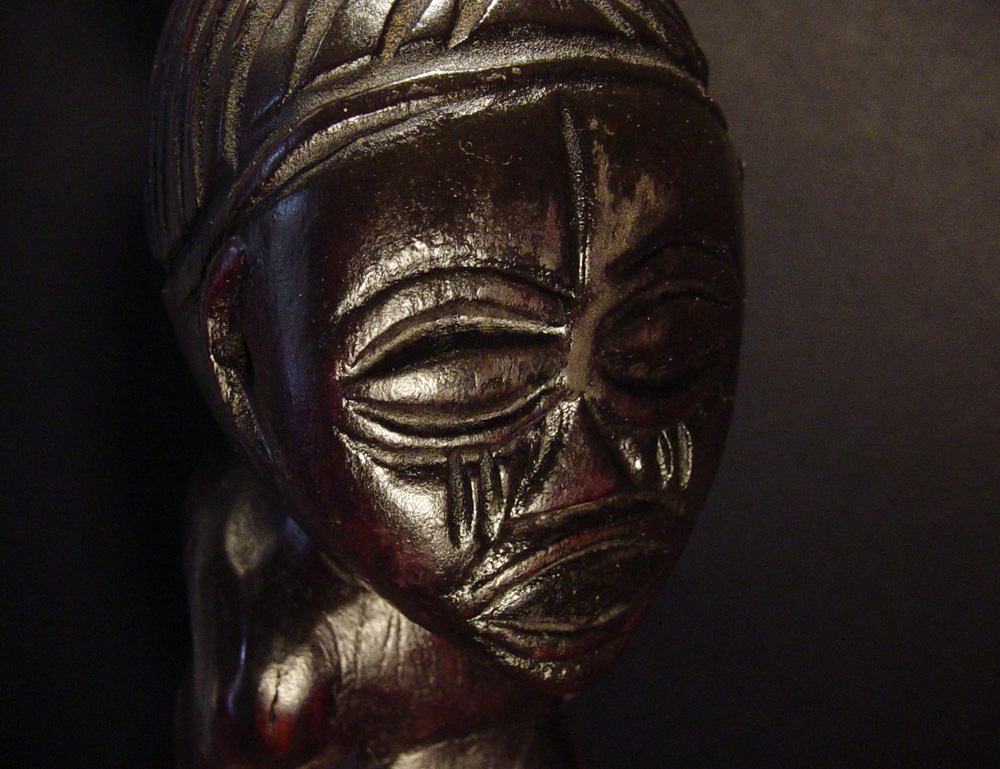
In questo primo piano della parte ventrale sono visibili i tatuaggi denominati “mikonda” praticati al pube della giovane donna durante i riti di iniziazione delle adolescenti.

” Piccola, compatta scultura, dalle forme essenziali. Vista di profilo, la figura ha uno spiccato ritmo dato dalle scapole convesse e dalla soluzione delle braccia; il risultato scultoreo così ottenuto non è immemore da quello di altri popoli non lontani, quali gli Yaka ed i Suku.

Chokwe figure Primo piano voltoChokwe figure Volto 1

Il volto e la coiffure sono resi con incisioni e scanalature lineari. Il mento a punta, dà al viso un’impronta a forma di cuore. La patina è scura e sudante sulla faccia, e si alterna tra nero e marrone lungo il corpo.

La scultura è forse in relazione con i culti Mukishi o Hamba, o con entrambi allo stesso tempo. L’hamba (pl. Mhamba) è lo spirito ancestrale della natura a cui è dedicato uno specifico rituale nel quale vengono utilizzati legni, pezzi di termitai, figure volutamente semplificate e maschere “. ( B.von Lintig, 2011)

“Le società senza scrittura hanno sviluppato talvolta dei metodi abbastanza complessi di comunicazione talvolta. Tra questi, si può annoverare una delle tecniche divinatorie dei Tshokwe, tecnica che loro stessi chiamano ngombo y a cisuka, che significa ” tecnica divinatoria da scuotimento.” Infatti, consiste nello scuotere un insieme di oggetti (60/100) contenuti in un cesto da cui consegue una” lettura” dei fatti a seconda della disposizione che hanno assunto gli oggetti medesimi presenti nel cesto.

….La tecnica divinatoria ngombo y a cisuka nasce nella cornice rituale dello hamba (pl. Mahamba), concetto fondamentale che definisce le credenze magico-religiose dei Tshokwe; compito dei mahamba, infatti, è garantire la continuità tra i mondi dei viventi e quello delle morti.

… Un autorevole diviner non può scomparire senza che, presto o tardi, non abbia trasmesso il suo spirito ad uno dei suoi intimi, attraverso rituali destinati alla trasmissione del suo sapere. Il nuovo diviner eserciterà il mestiere del suo antenato ed in tal modo, la continuità del prestigio acquisito, preserverà l’integrità dell’intero gruppo”. (M.L. Rodriguez de Areia, 1976)

j

a cura di Elio Revera
“La nuit, nous avons une autre vie”. Les figures Loumbo du Bwiti

Culte bwiti, Photo Michel Huet 1951ca. (2)Lumbu testa (2)
…un hommage à la beauté des filles Loumbo!

Originaires du royaume du Congo, comme les Vili et les Punu, les Loumbo ont migré, au cours de ces trois derniers siècles, vers la côte sud-ouest du Gabon, entre Ndindi (frontière du Congo) et Mayoumba, s’arrêtant au nord sur la rivière Nyanga et à l’est à Tchibanga.

Hubert DeschampsQuinze ans de Gabon (1839-1853)

Les Loumbo ont adopté la puissante société initiatique Bwiti des Tsogho voisins, et son support cultuel majeur: les paniers-reliquaires avec la statuette mbumba bwiti, ce qui est une allusion à la protection et au pouvoir.
(Gabon, cultures et techniques, Musée des Arts et Traditions, Libreville, 1969, p. 79 (n° Musée 68. 8b. 2).

Selon toute vraisemblance, le Bwiti initial pris naissance chez les Mitsogho quand après leur tradition orale ils atteignirent actuel territoire du Gabon. A cette époque le Bwiti initial était lui-même issu un syncrétisme qui devait ses origines au culte ancêtres (mombe) revalorisé par la découverte de l’iboga une part et par apport culturel acquis au cours des migrations des Mitsogho autre part. (Gollnhofer O., Sillans R. ,1965).

“Nous avons déjà indiqué que le Bwiti était une «religion», une «grande religion». Son but est de «voir». «Voir comme Dieu a fait le ciel et la terre, tu peux voir Dieu lui-même» ; les aspirants viennent trouver les initiés en les insultant et en demandant de «voir Bwiti» pour entrer dans la secte…
«Voir» est bien souvent entendu en un autre sens que celui d’une vision mystique, avec des préoccupations plus pratiques, lorsque l’on s’entretient de l’intérêt d’entrer dans le Bwiti: celui-ci fait «voir» amis et ennemis et permet ainsi de se défendre contre les entreprises de sorcellerie. On ne voit plus les autres avec leur visage habituel, mais on perçoit leur nature cachée.

lll
(Photo F. Gaulme, 1972)

L’iboga, (Tabernanthe iboga), plante hallucinogène de la famille des Apocynacées qu’ils consomment à la fois sous forme de râpure et de macération d’écorce de la racine), aurait également pour effet de dédoubler la personnalité: l’initié se voit «de l’extérieur et de l’intérieur» en même temps. Il permet enfin de voir ce qui se passe la nuit, car «la nuit, nous avons une autre vie».
Cette vue privilégiée est symbolisée par le miroir placé au centre des figurines du Bwiti. Un des avantages essentiels procurés par l’entrée dans le Bwiti serait là pour certains de nos interlocuteurs: améliorer sa sécurité personnelle par ce don précieux. Il est d’ailleurs bien connu de la tradition myènè: sous le nom d’okowe, «double-vue», elle l’attribuait aux chefs.
C’est ainsi également que l’on peut avoir recours au Bwiti pour la divination: il devient alors bwiti-misoko, comme le spécialiste du surnaturel, l’oganga, qui devient nganga-misoko lorsqu’il pratique la divination…

Le Bwiti est incostetabliment lié au culte des ancêtres, surtout dans la région littorale Sud du Gabon où une danse publique au moment des funérailles «permet de parler une dernière fois avec l’esprit du mort”. (Gaulme F,1979)

Courtesy You Tube

Pour la connaissance du rituel Bwti, v. Binet Jacques, Gollnhofer Otto, Sillans Roger. Textes religieux du Bwiti-fan et de ses confréries prophétiques dans leurs cadres rituels.. In: Cahiers d’études africaines, vol. 12, n°46, 1972. pp. 197-253.

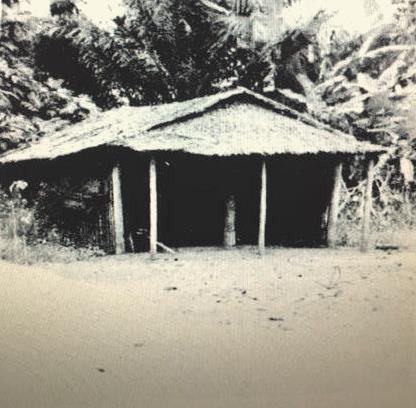
Culte bwiti, Photo Michel Huet 1951ca.
Culte bwiti, Photo Michel Huet, 1951 ca.

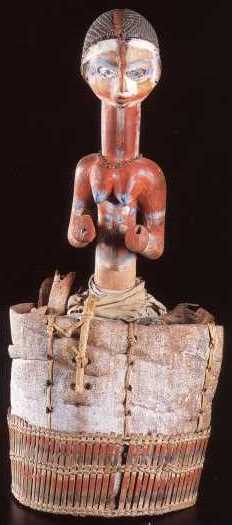
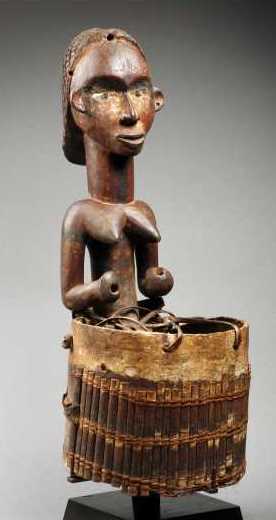
Placés sous la responsabilité du Nganga, à la fois féticheur, juge, médecin, homme de pouvoir, les paniers-reliquaires étaient disposés lors des cérémonies dans une sorte de tabernacle au fond du temple du Bwiti ( mbandja). Ici, chaque trait accentue l’impact visuel signifiant aux initiés la puissance protectrice de l’effigie.
A l’acuité du regard répond la bouche ouverte rappelant l’absorption par les initiés de l’écorce iboga, tandis que la richesse de la polychromie reprend les couleurs dont les initiés se recouvraient le corps. (C.Falgayrettes-Leveau, 2006)

“Or, la représentation la plus ancienne que nous possédions d’un «Bwiti
dans sa case»
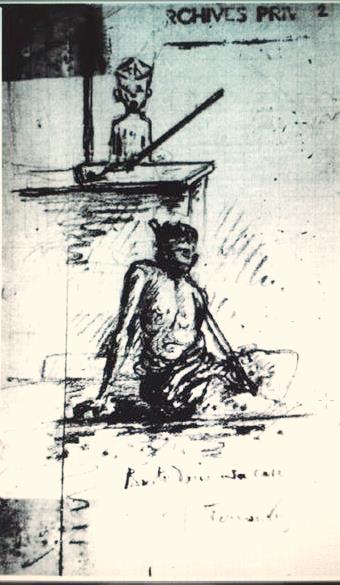
de la région du «Fernan-Vaz» est un croquis au crayon de Mgr. Le Roy, qu’il fit probablement en 1893, au cours d’une visite à la Maison Sainte-Anne et d’une tournée dans la lagune et ses alentours.

dessin de Mgr Le Roy
Bwiti dans sa case, (Fernan-Vaz), croquis de Mgr Le Roy, exécuté probablement en 1893, s. d., Archives Spiritaines, Paris (Photo Archives Spiritaines).

La statuette qui y figure évoque nettement les reliquaires bakota, ou mieux balumbo. Ceux-ci sans être ornés de cuivre comme les premiers surmontent cependant, eux aussi, une corbeille contenant les reliques d’ancêtres.
Le dessin de Mgr. Le Roy ne révèle pas la présence d’une corbeille sous la figurine, mais il est fort probable qu’elle se trouvait cachée par l’objet placé en avant-scène et gardé par un personnage accroupi…
Il n’est pas nécessaire de démontrer le caractère traditionnel de ces reliquaires et de leur aspect, d’ailleurs analogue à celui des figurines du bwete mitsogo, mais il convient d’apprécier leur importance sociologique, et mieux, politique, dans les cultures côtières du Gabon.
Andrew Battell nous apprend que, au début du XVIIe siècle, dans la ville de Mani Mayombe (Mayumba) , “il y a un fétiche appelé Maramba, il se tient dans un panier haut fabriqué comme une ruche, à l’abri d’une grande maison. C’est leur maison de religion, car ils ne croient qu’en lui, et gardent ses lois, et transportent toujours ses reliques avec eux”.

C’est là nous semble-t-il une allusion au mbandja, édifice abritant une statue reliquaire du type de celles que nous venons de décrire. Ce genre de culte ne se limite en aucune façon au pays mitsogo et paraît être ancien sur le littoral gabonais.

Listener
Mbandja nkomi, Elomba, Fernan-Vaz, juillet 1972 (photo F. Gaulme).
Modèle assez ancien et de construction soignée. On remarquera les franges de raphia caractéristiques et qui sont liées au culte des morts. Courtesy F. Gaulme

Il est donc facile de lier le culte des ancêtres au Bwiti”.( In the town of Mani Mayombe is a fetish called Maramba, and it standeth in a high basket made like a hive, and over it a great house. This is their house of religion, for they believe only in him, and keep his laws, and carry his reliques always with them). E. G. Ravenstein, The Strange Adventures of Andrew Battell of Leigh, in Angola and the Adjoining Regions, Londres, 1901″ (Gaulme F,1979)

Le récit d’Andrew Battell est écrit et oral. Les versions orales sont présentées en 1613 à l’écrivain et géographe anglais Samuel Purchas qui en publie le résumé avec ses notes: Samuel Purchas, Purchas his pilgrimage, Londres, William Stansby, 1613, une description historique générale du monde. Purchas obtient ensuite le manuscrit d’A. Battell et le publie avec ses propres annotations, additions et altérations en 1625. En 1901, Ernest Ravenstein produit une édition moderne des deux documents, avec des notes d’une précision et d’une pertinence surprenantes, dans The strange adventures of Andrew Battell of Leigh in Angola and the adjoining regions, éd. par E. G. Ravenstein, Londres, Hakluyt Society, 1901.

Les Mbumba Bwiti

“La statuaire lumbu est surtout compose de ststues fétiches (nkisi), de reliquaries (mbumba) et d’amulettes (muswinga). Les kisi et les mbumba étaient entreposés dans des paniers sur les autels de sanctuaires; certains faisaient partie des objets rituels des nganga, les devins-guérisseurs. En lien avec les esprits de la nature et des ancêtres, ces objets connurent un âge d’or à la fin du XVIII siècle à Mayumba, lors du déclin du royaume de Loango, puis une rupture dès 1887 due au phénomène d’acculturation induit par la présence colonial de la France qui entraîna une degradation des coutumes locales des peoples de la côte.” (C. Grand-Dufay, 2015)

Listener
Courtesy, AA.VV. “Art et Artisanat Tsogho”. RELIQUAIRE, mbumba, h. 17 cm ; diam. panier = 31 cm, provenance: près de Fougamou (Ngounié, centre Gabon).
Fonctions ou utilisations: est placé dans une chambre secrète du temple du culte de Bwété. Les grands initiés lui font des offrandes et des prières pour que le néophyte ait facilement des visions de l’au-delà. Matériaux : bois de gésanga (Ricinodendron qfiicanum Muell. Arg.) coloré à la sciure rouge de padouk tsingo. Ossements enveloppés d’une plaque de cuivre attachée avec des lianes kotaghota. Panier de rotin commun (Eremospatha Cabrae De Wild).

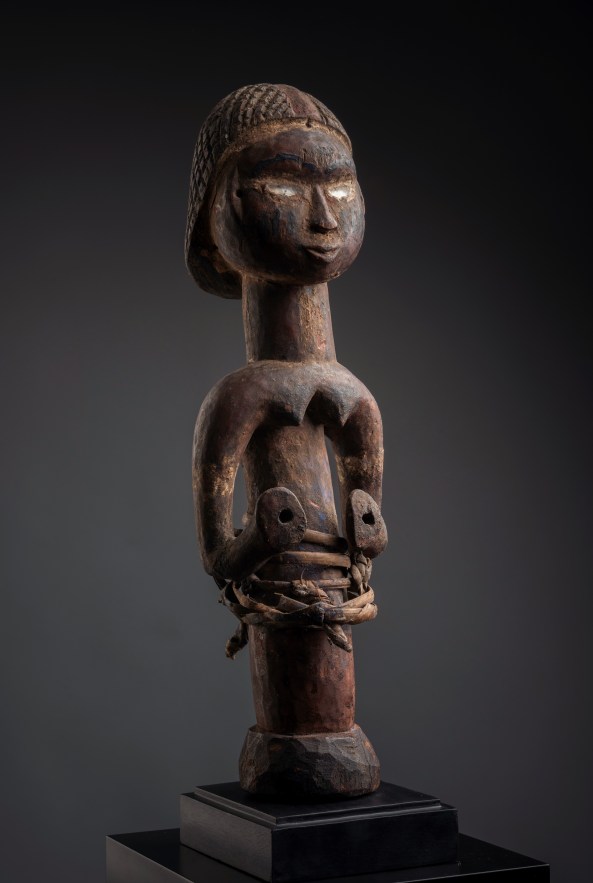
Nommée mbumba (“arc-en-ciel”), la statue Loumbo qui les domine se caractérise par un visage féminin à la beauté idéalisée, polychrome, aux yeux incrustés de fragments de miroir, réminiscences de la statuaire Kongo, paré d’une large coiffe en casque à couvre-nuque, striée de nattes et séparée par un sillon median rehaussé de ocre rouge.
Branly 32 cm
cm 46

De forme longiligne, le cou et le tronc sont cylindriques. Les bras, aux mains schématisées, détachés du corp, sont tendus en avant sous la poitrine pointue.Des trous aux mains et au front servaient à des ornements rapportés.

Goldet 32266116837

Le culte des ancêtres et des statues reliquaires étaient très actif dans le sud-ouest du Gabon, région de Tchibanga, où l’on venait leur faire des offrandes.
Il était fréquent qu’au décès du Nganga (s’il n’avait pas de successeur), la statuette mbumba bwiti soit inhumée avec lui, ce qui explique le corpus très très restreint de ces œuvres.


Lumbu (2)
Figure de reliquaire Loumbo, mbumba bwiti, Région de Tchibanga, Gabon sud-ouest. Bois, kaolin, pigments couleur, miroir, éléments végétaux du panier- reliquaire
Hauteur: 43 cm, coll. Zurich, Suisse

Lumbu profilo

Une figure très puissante, la mbumba. P. Birinda écrite:

“Le fétiche de M’Boumba est formellement interdit par le Bouity (Bwiti), mais, [ … ]pour user de la puissance de M’Boumba (mbumba), il faut posséder les plus hautes sciences spirituelles être Moussoumbi, maître en Muniambi, qui n’est pas une «religion», mais une «science» qui a une «doctrine commune» avec le Bouity et qui donne leur pouvoir aux «rois>.

Lumbu2Lumbu3


Bibliographie

-Gollnhofer O. et Sillans R: Recherche sur le mysticisme des Mitsogo peuple de montagnards du Gabon central Afrique equatoriale in D. ZAHAN éd Réincarnation et vie mystique en Afrique noire Colloque de Strasbourg 16-18 mai 1963,) Paris 1965 pp 143-173.
-Gaulme F. Le Bwiti chez les Nkomi: association cultuelles et évolution historique sur le littoral gabonais In: Journal des africanistes, 1979, tome 49, fascicule 2. pp. 37-87.
-Binet J., Gollnhofer O., Sillans R. Textes religieux du Bwiti-fan et de ses confréries prophétiques dans leurs cadres rituels.. In: Cahiers d’études africaines, vol. 12, n°46, 1972. pp. 197-253.
-Birinda P., La Bible secrète des Noirs selon le Bouity, pag.110, Paris, 1952
-Gollnhofer O., Sillans R., Sallée P., Perrois L. Art et Artisanat Tsogho, Orstom, 1975
-Falgayrettes-Leveau C., Gabon, presence des esprits, pp. 130-141, Dapper éd. Paris, 2006)
-Grand-Daufy C., La statuaire lumbu. Une art tout en finesse révélé au débout du XX siècle, in Tribal Art, pp. 114-127, n. 77, Automne 2015


Lumbu testa

Elio Revera
Description des sculptures, de gauche à droite, de haut en bas. Courtesy:
Coll. particulière, 46 cm, Milan, Italie
Coll. quai Branly, 32 cm, photo CI.B. Hatala
ex Coll. H. Goldet, 65,5 cm, photo T. Goldet
Coll. P. Amrouche, 54 cm, photo B. Veignant


Lumbu retro

Semplifico dunque capisco…poco!!

Perchè abbiamo bisogno di semplificare la complessità?
Questa domanda può ragionevolmente ricevere un migliaio di risposte. Qui ne darò una soltanto, perchè è più tranquillizzante!

Cosa c’entra tutto ciò con l’arte classica africana?

Molto più di quanto si immagini.

Come si è regolato l’occidente storico/politico/religioso e di seguito quello mercantile, nei confronti della cultura antropologica, culturale ed artistica del continente africano, se non semplificare?

Prima tracciando comodi confini, poi dividendo popoli ed etnie, infine classificando rigide culture, tradizioni ed origini.

Come è tutto rassicurante! Come tutto torna!

I Fang di qua…i Kota di là!
Gli Hemba a nord…i Luba a sud…ed i Songye di mezzo!
Bello no!…tutto torna, tutto si spiega.

Ma cosa torna? Ma cosa si spiega !!!

Messa così la storia culturale ed artistica dei popoli assurge a parodia, a commedia, a ridicola messa in scena.

E dal momento che mi interesso di arte, un solo esempio, tra i mille possibili, proverò ad illustrare qui di seguito.

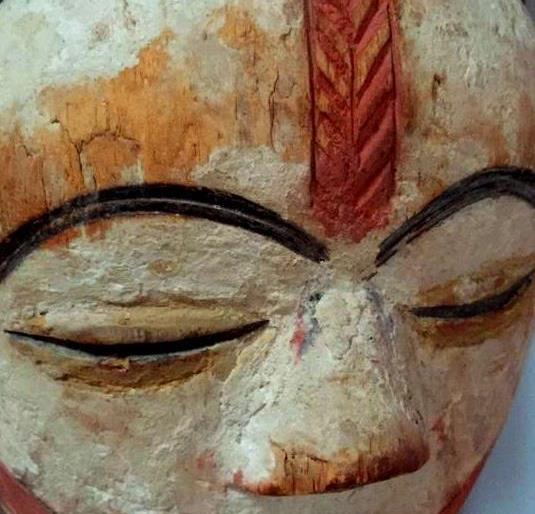
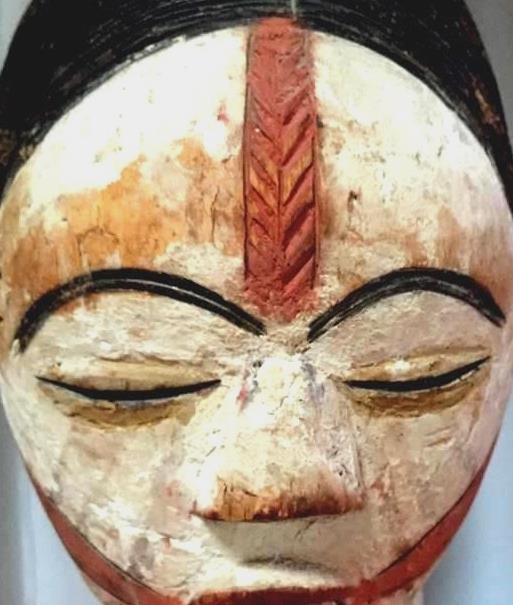
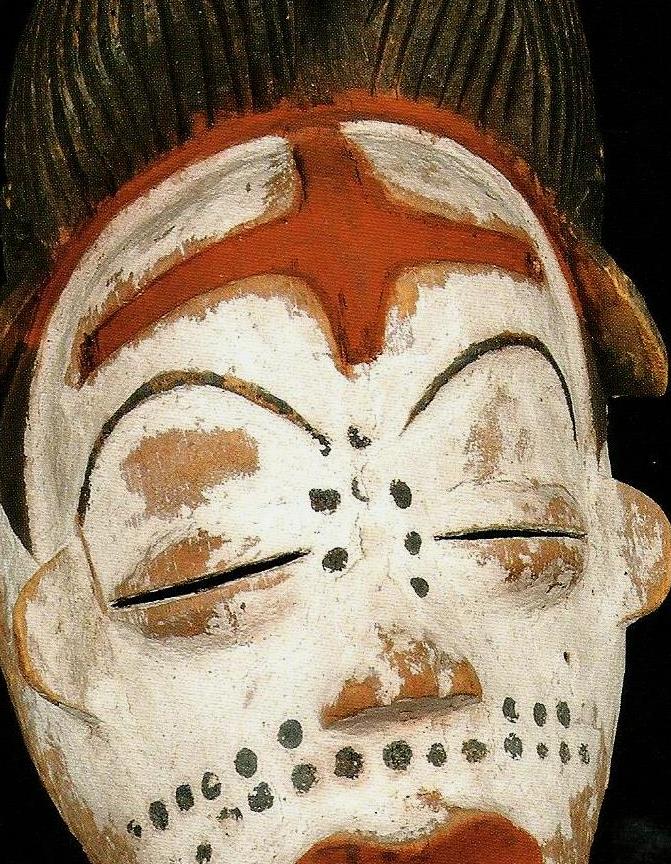
Guardate queste due immagini, anzi i particolari di due volti.

Tengo a precisare che sia queste immagini che le successive sono state volutamente prese senza particolari attenzioni fotografiche (inclinazione o posizione) proprio per evidenziare come coincidenze e difformità siano riscontrabili tout-court.

elio1Listener

Che dire? Non fosse che per alcuni dettagli di colore, parrebbero lo stesso oggetto in due inquadrature diverse!
Chi potrebbe immaginare che al contrario i due oggetti sono divisi da rigidi confini ben tracciati…il Gabon ed il Congo Brazzaville!!!

Ma continuiamo allargando l’immagine…ora differenze e similitudini sono più evidenti tra i due manufatti.

Qualcuno tra voi lettori riesce ad affermare ragionevolmente, che le culture di questi due popoli sono così immemori l’una dell’altra? Non hanno cioè matrici culturali, estetiche e formali in comuni origini?

Eppure appartengono a nazioni diverse e per noi occidentali il Congo è il Congo ed il Gabon il Gabon …che diamine!!!

2punu2

Ora appare svelato il mio intendimento e come tanto ancora ci sia da indagare e conoscere delle culture di quei lontani popoli.
Ora è chiaro attraverso le immagini quanto siano profonde le comuni origini culturali/antropologiche dei popoli che mai nessuna divisione politica e geografica, nessuna banale semplificazione, potranno mai appianare.

In un recente lavoro, Carlo Rovelli, sottolineando l’importanza del “dialogo” tra le teorie interpretative della fisica  di ieri e di oggi, ha scritto che ciò vale anche tra le culture – Le frontiere tra teorie, discipline,epoche, culture, popoli, persone, sono terribilmente permeabili, ed il nostro sapere si nutre degli scambi attravero questa permeabilità. Anzi, ha precisato, – Il sapere è il risultato in continua evoluzione di questa fitta rete di scambi.

Ma concludiamo con le immagini integrali dei due oggetti, che certo tanti avranno già identificato.

punu
Maschera di danza Okuyi della cultura Punu, Gabon, appartenente al Museo del quai Branly, raccolta nel 1930.Courtesy, “Punu. Visions d’Afrique” di L. Perrois e C. Grand-Dufay , 5 Continents ed.
Kuyu1Kuyu2
Sommità di figura della danza rituale Kébé Kébé della cultura Kuyu, Congo Brazzaville. Courtesy Denise e Beppe Berna Gallery.

“Deux boumaneoussi se sont retirer dans la brousse ou deux d’entre eux s’habillent de l’éboula, c’est à dire de la vaste toile faite de pagne de rafia qui tombe à longs plis autour du corps. Au sommet du pagne de l’éboula, surgit la tête de l’éouya, c’est à dire une tête de bois sculptée comme une tête de Kouyou. Sur cette tête sont piquées de plumes de poules qui portent le nom de miododos. le vaste pagne de l’éboula s’appelle aussi mokanda, c’est à dire peau, parce qu’elle représente le mokanda na djo, la peau de serpent… Un des capitas ou kani-mé-koutou quitte sa place et muni d’une cloche en fer va chercher l’un des éouyas. Il l’invite a entrer dans la danse. Il l’emmène au milieu des groupes, le visage tourné vers lui, en marchant à reculons et en frappant de la cloche en fer, à coups égrenées. Le serpent vient à lui, l’homme recule. L’homme s’avance, à l’air de menacer le serpent, celui-ci lui résiste…Le serpent qui a sauté jusqu’alors se couche tout à coup. Il se met a tourner à une vitesse vertigineuse. Le vaste pagne de l’éouya se gonfle au vent et rase le sol, la tête de l’éouya tourne en frôlant la terre. Dans le public, des voix excitent l’éouya a tourner. Son mouvement de rotation augmente encore de vitesse. Quand il ne peut plus tourner, il tombe à terre épuisé. La foule l’ovationne: ô ô ô ô ô ô .” (pp. 299-300, 1920. Poupon, M. A. “Etude Ethnographique de la Tribu Kouyou (suite).” l’Anthropologie, Vol. 29.)

90228_images_image_2107_medium
Courtesy RAAI, James J. Ross Archive of African Images 1590 – 1920

« Two Boumaneoussi go into the jungle where two of them are dressed in ’éboula, that is to say with the immense cloth made into a rafia loincloth that falls in long pleats around the body. At the top of the ‘eboula’ loincloth, springs up the head of the ‘éuoya,’ that is to say a wooden head sculpted like a head of Kouyou. The feathers of hens which carry the name of ‘miododos’ are stitched to this head. The immense loincloth of ‘l’éboula’ is called ‘mokanda,’ which is skin, because it represents the ‘mokanda na djo,’ the skin of the serpent…One of the ‘capitas’ where Kani-me’-koutou leaves his place and, supplied with an iron bell, goes to look for one of the ‘éouyas.’ He invites it to enter in the dance. He brings it to the center of the groups, the face turns towards him, backing away and hitting the iron bell, with successive blows. The serpent comes to him; the man recoils. The man advances with a menacing air towards the serpent that resists him…The serpent which has jumped until now lies down instantly. He begins to turn with a vertiginous speed. The immense loincloth of the ‘éouya’ becomes inflated in the wind and hugs the ground; the head of the ‘éouya’ turns, brushing the ground. In the audience, voices excite the ‘éouya’ to rotate. His rotating movement continues to increase in speed. When he can’t rotate anymore, he falls to the floor exhausted. The crowd gives him an ovation: ô ô ô ô ô ô .” (pp. 299-300, 1920. Poupon, M. A. “Etude Ethnographique de la Tribu Kouyou (suite).” l’Anthropologie, Vol. 29.)

46715_images_image_
Courtesy RAAI, James J. Ross Archive of African Images 1590 – 1920

Certo, oggetti molto diversi, entrambi però ritualmente legati a danze propiziatorie, ma separati geograficamente da confini e da migliaia di chilometri ed appartenenti, inoltre, a popoli diversi.

Kuyu3

Come ha scritto frére A. Cornet nell’introduction du catalogue par la Galerie Leloup sur l’exposition “Kongo”, edité en juin 1998:
“L’art Kongo est sans doute le plus fécond de tous les arts du centre de l’Afrique. Son aire géographique épanouit sur cinq pays différents la République démocratique du Congo, la République Populaire du Congo, la République Angola, le Cabinda et la République gabonaise.
Au départ il y eut le grand Royaume de Congo que les Portugais la fin du xve siècle furent très surpris de découvrir avec ses structures administratives et la décentralisation de multiples provinces ferments expressions humaines multiples dont art était élément le plus révélateur.
Certes à époque les Européens étaient infiniment éloignés une vraie compréhension Il faudra attendre le xxe siècle pour que art kongo prenne sa place parmi les meilleurs.”

Ma se la semplificazione non spinge oltre l’indagine, non correremo in tal modo il rischio di ritrovarci con un ramo secco tra le mani, dimenticando che quello stecco apparteneva in origine ad un frondoso albero verde?!

Gall Carel van Lier Kuyo 1927 Amsterdam

Elio Revera

kuyu-danza-kebe-kebe

Kuyu, Kébé Kébé dance

Yaka people, Kholuka mask, Democratic Republic of Congo

yaka_012

end of 19th century – early 20th century
Wood, painted in white, blue and ocher, cloth and fibers
H. 15,7 in/40 cm
Private Collection Milano
Photo by Luca del Pia
Arti delle Mani Nere All Rights Reserved

Provenance:
– Formerly in the collection of Henry Jacob (1969), Belgium
– Didier Claes, Bruxelles, Belgium
– Renaud Vanuxem, Paris, France

Exhibition:
– Claes Gallery – Exposition Yaka & Suku – Sablon “Rive gauche” 29-31 mars 2012
Bruneaf XXII, 6th-10th June 2012, Bruxelles

This mask is from the northern Yaka more likely from the Munene chiefdom, and was part of a set of masks, generally paired in the celebrations following the initiation of young males in Nkanda. The ceremonies are intended to further the adolescents’ social and physical maturity, and in particular to insure their virility as a guarantee of the community’ future.

The northern Yaka consider the kholuka mask to be one of the most significant types used in this context. It is worn only by the supervisors of the initiates. Its dance concludes the ceremony that marks the end of seclusion.
The dances are accompanied by songs concerned with adult masculinity, intended to confirm the new social status of the young men.

52333110

Like other Northern Yaka masks of this type, it combines carved elements with other parts: raffia, cloth, resin: here, the fabric coiffure coated with richly polychrome is composed of a central crest and two antenna-like projections “mizaanga” o “migaandi” on either at the other. The colors and the various elements of the mask have symbolic meanings related to the Yaka cosmogony.

yaka_011

The carved face is mounted on a circular framework and is related to fertility, femininity and there is reference to the moon in the frame that encircles the mask while the sharply upturned nose could be linked to the symbolism of the elephant that is an allusion to the male sex.
About the mouth is possible to observe the absence of central teeth in the upper jaw: in fact children’s teeth were removed because of tetanus, so as to have a way in which to introduce the drug once taken the infection.
All various exaggerated features speak to desirable characteristics of the young initiated male.
At the same time, the composition encompasses a variety of elements of both male e female connotation, pointing to an androgynous character that mitigates the emphasis on masculinity expressed in the ritual.

The collar of raffia that hid the wooden handle to manipulate the mask was withdrawn (the raffia share symbolic associations with the fertile palm-tree). This allows to fully appreciate the quality of the sculpture and its volumes, favoring a play of lines and shadows, especially on the circular edge of the face and the elegant twist of the nose.

yaka_010

Bibliography:

– BIEBUYCK, Daniel B., 1985, The Arts of Zaire, vol I: Southwestern Zaire, Berkeley/Los Angeles/London.
– BLADES, Richard, 1985, “Yaka”, in Herbet Cole (ed.), I am not myself. The Art of African Masquerade, Museum of Cultural History, UCLA, Los Angeles, pp. 78-82
– BOURGEOIS, Arthur P., 1984, Art of the Yaka and Suku, Alain et Françoise Chaffin editeurs, Paris
– BOURGEOIS, Arthur P., 1993, “Mask and Masking among the Yaka, Suku and Related Peoples”, in Frank Herreman and Costantijn Petridis (eds.) Face of the Spirits, Masks from the Zaire Basin, Ethonographic Museum, Antwerp, pp. 49-56
– CORNET, Joseph, 1973, Afrikanische Kunst. Schätze vom Zaïre, Geneva.
– GARDI, Barnhard, 1986, Zaïre. Masken, Figuren, Museum für Völkerkunde und Schweizerisches Museum für Volkskunde, Basel.
– PLANCQUAERT, M., 1930, Le Sociétés secrètes des Bayaka, Louvain.

Yaka people, Maschera KHOLUKA, Repubblica Democratica del Congo

fine 19th secolo – inizio 20th secolo
Legno colorato di bianco, blu e ocra, tessuto e fibre,
H. 40 cm
Collezione Privata Milano
Photo by Luca del Pia
Arti delle Mani Nere All Rights Reserved

Provenienza:
– Collezione Henry Jacob (1969), Belgio
– Didier Claes, Bruxelles, Belgio
– Renaud Vanuxem, Parigi, Francia

Esposizioni:

– Claes Gallery – Exposition Yaka & Suku – Sablon “Rive gauche” 29-31 mars 2012
– Bruneaf XXII, 6 – 10 giugno 2012, Bruxelles

Questa maschera proviene dagli Yaka del nord, molto probabilmente dallo chiefdom Munene, e faceva parte di una serie di maschere, generalmente associate alle celebrazioni successive all’iniziazione dei giovani maschi dette Nkanda. Le cerimonie hanno lo scopo di promuovere la maturità sociale e fisica degli adolescenti, ed in particolare devono assicurare la loro virilità come garanzia del futuro della comunità.

Fra gli Yaka settentrionali, la maschera kholuka è considerata una delle più importanti utilizzate in questo contesto. E ‘indossata solo da colui che vigila gli iniziati. La sua danza conclude la cerimonia che segna la fine del periodo di segregazione dei ragazzi.
Le danze sono accompagnate da canti che parlano della mascolinità degli adulti, destinati a confermare il nuovo status sociale dei giovani.

Come altre maschere di questa tipologia, vengono combinati elementi scolpiti con le altre parti: rafia, stoffa, resina: qui, la pettinatura in fibre presenta una ricca policromia ed è composta da una cresta centrale e da due antenne “mizaanga” o “migaandi ” poste su entrambi i lati. I colori ed i vari elementi della maschera hanno significati simbolici legati alla cosmogonia Yaka.

Il volto scolpito è incorniciato in una struttura circolare (un riferimento alla luna), e sarebbe da rapportarsi alla fertilità e femminilità, mentre il naso all’insù potrebbe essere legato al simbolismo dell’elefante, che è un’allusione al sesso maschile.
In merito alla bocca è possibile osservare la mancanza dei denti centrali nell’arcata superiore: infatti i denti dei bambini erano rimossi a causa del tetano, in modo da avere una via in cui introdurre il farmaco una volta presa l’infezione.
Tutti questi elementi “esagerati ed eccessivi” si riferiscono alle caratteristiche desiderabili del giovane maschio iniziato.
Allo stesso tempo, la composizione comprende una varietà di elementi di connotazione sia maschile sia femminile, indicando un carattere androgino della maschera, teso a mitigare l’accento sulla mascolinità espressa nel rituale.

Il collare di rafia che nascondeva l’impugnatura di legno utilizzata per reggere la maschera è stato tolto (la rafia è simbolicamente associata con la fertile palma). Questo permette di apprezzare appieno la qualità della scultura e i suoi volumi, favorendo un gioco di linee e ombre, in particolare del bordo circolare del viso e la torsione elegante del naso.

photo112